The best ham radio antennas are the ones that fit the bands you use and the space you have. A plain dipole in the clear will beat a famous design stuffed into a lot that cannot hold it.
Skip the shopping-list version of this question. Model numbers go stale, and a gain figure from someone else’s review does not describe your yard. Split the choice by job. Local VHF and UHF. HF wires. Verticals where a wire will not fit.
Put up one antenna you can finish this weekend. Add a second when you know which contacts you are missing.
A Vertical for Local Repeaters
For repeaters and simplex, a dual-band vertical is the usual base antenna. Height and a clear view do more than a long feature list. Get it above the roof, keep metal and wiring out of its face, and feed it with decent coax.
A handheld rubber duck is fine for a strong machine nearby. It is a compromise the moment you want the edge of town. The same radio on an outside vertical is a different station.
If you are still choosing the radio for those bands, that comparison is Dual-Band vs Tri-Band Radio. The car version of this antenna uses a different mount, covered under mobile ham radio.
HF Wires People Actually Use
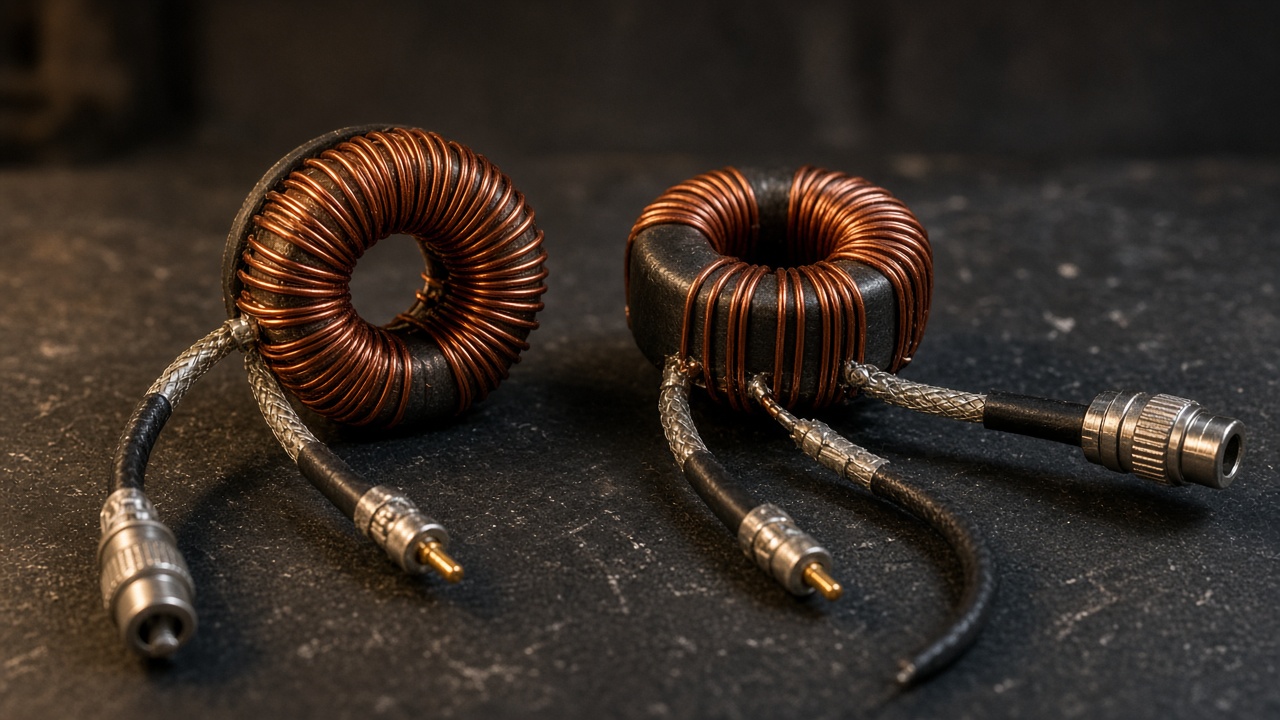
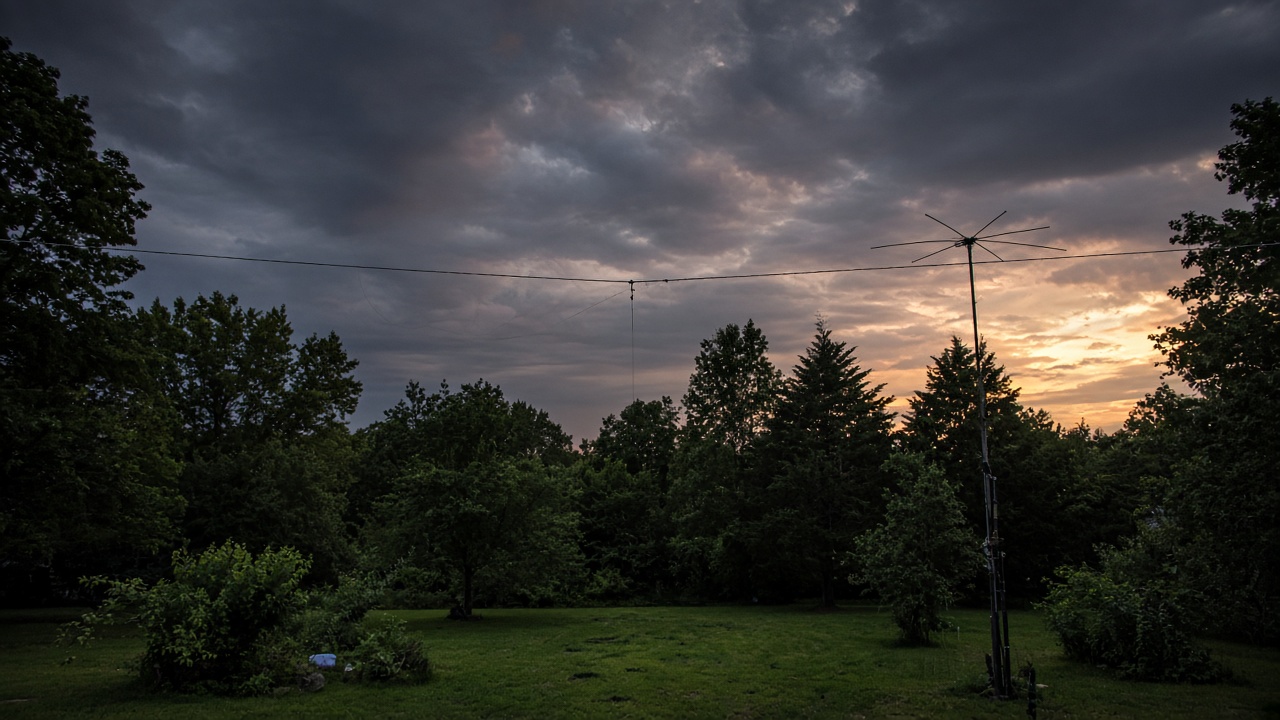
A half-wave dipole is the straightforward HF antenna. Cut it for the band you want, get the center as high as you can, and feed it with coax through a 1:1 current balun. One band. One wire. You can hear whether it works on the first evening.
A fan dipole or a trap dipole adds bands in the same span. Each extra band is another thing to tune. An end-fed wire fits odd lots because you only have to support one high end. It needs the right unun and a counterpoise, or it will use the coax as the missing half. That match is the point of Unun vs Balun.
Feed a dipole with window line back to a tuner and one wire can cover several HF bands. The tuner lets a wire that is the wrong length still take power. It does not replace height.
Verticals and Beams
An HF vertical takes less horizontal room and wants radials. Skip the radials and you have a lossy compromise. A small magnetic loop fits some balconies and attics. It is narrow, you retune it when you move frequency, and it will not outrun a dipole that has open sky around it.
A Yagi is the directional choice once you know you want one heading, on VHF or on a single HF band. It needs a mast that can hold it, and a rotator if you want to turn it. It is a poor first antenna.
Wires you raise and drop yourself belong with a portable ham radio setup. Pack an antenna one person can put up.
Decide This Before You Buy
Bands come first. A 2-meter vertical does not work on 40 meters, and a 40-meter dipole is a poor repeater antenna.
Space comes next. Measure the yard, the attic, or the balcony before you commit to a length that will not fit.
Then height. On HF, higher and in the clear beats a fancier shape lost in the branches.
Then the feed line. A long, lossy run can eat the improvement you just put in the air. Coaxial cable installation is worth doing before the antenna goes up.
Then the rules of the place you live. A wire you are allowed to keep will beat a tower you have to take down. Lightning protection is part of the install, not a later hobby.
How You Know It Works
Check SWR on the bands you mean to use, at the power you mean to run. Then make a contact. A low SWR into a dummy load is not an antenna. A dipole that gets you a real QSO is a good antenna, even if a catalog has a prettier picture.
Frequently Asked Questions
What is a good first antenna for local repeaters?
A dual-band vertical for 2 meters and 70 centimeters, mounted as high and as clear as you can manage. A rubber duck on a handheld will hit a strong nearby machine. The outside antenna is what reaches the rest of town. Feed it with coax that is not a long, lossy afterthought.
What HF antenna should I put up if I have a normal yard?
A half-wave dipole for the band you care about most. Get the center up, keep the wire out of the trees if you can, and use a 1:1 current balun where the coax meets the dipole. One band and one wire will teach you more than a complicated antenna you never finish tuning.
Do I need a tuner with every antenna?
A resonant dipole on its design band often needs no tuner at all. A non-resonant wire, or one wire asked to cover several HF bands, usually does. The tuner makes the radio see a workable load, without replacing height or stopping the coax shield from radiating.
Why does my vertical seem deaf?
HF verticals depend on radials or another planned return path. Leave those off and a lot of the power warms the ground instead of leaving as a signal. Check the radials, the feed-point connection, and the SWR on the band you are using before you blame the radio.