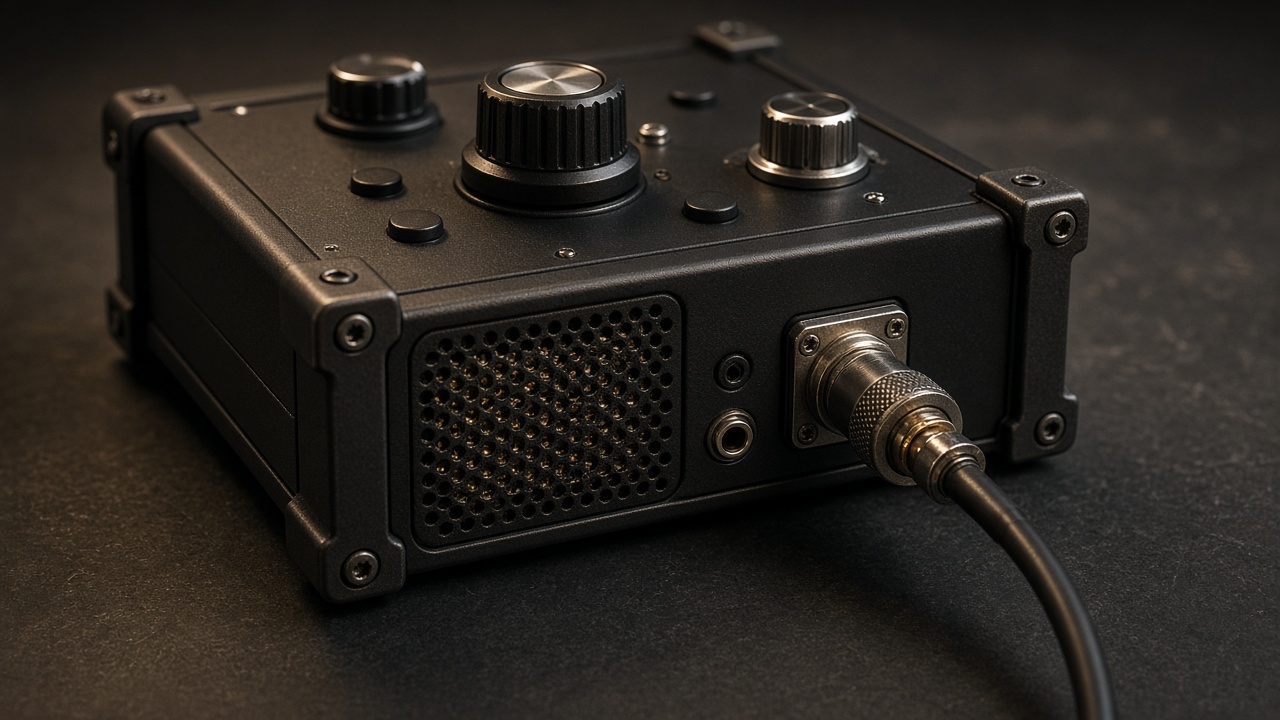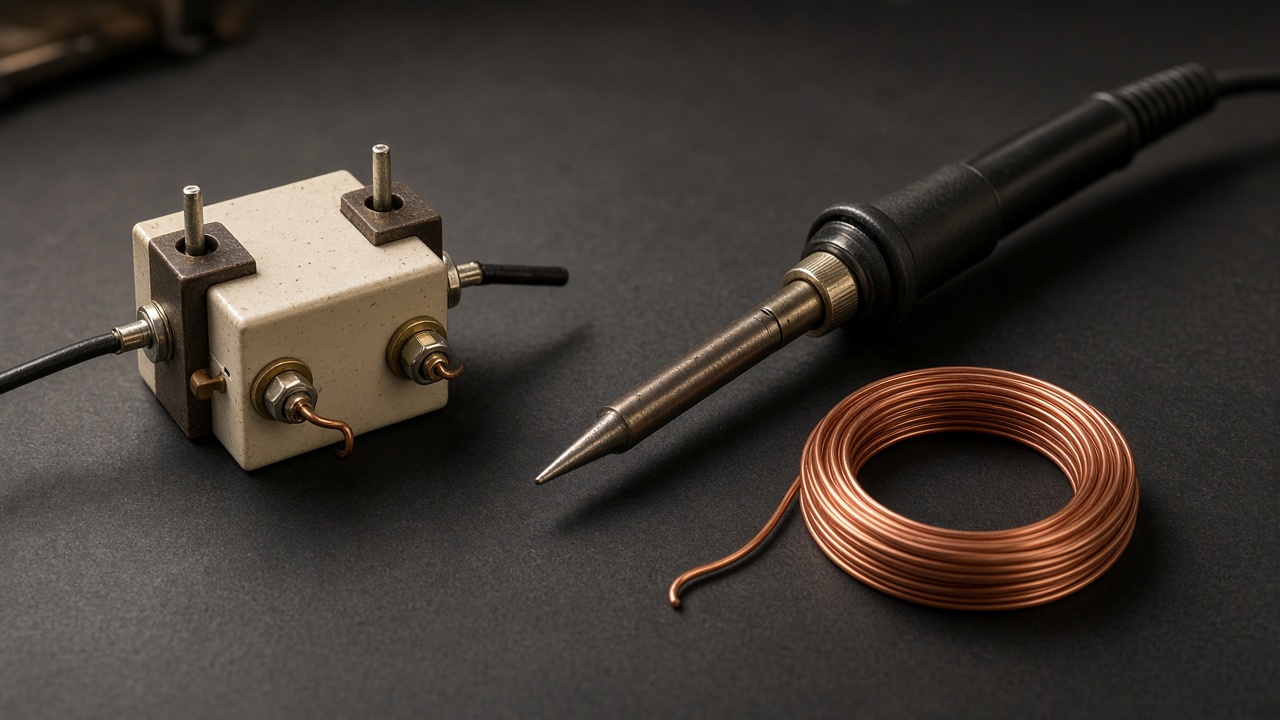
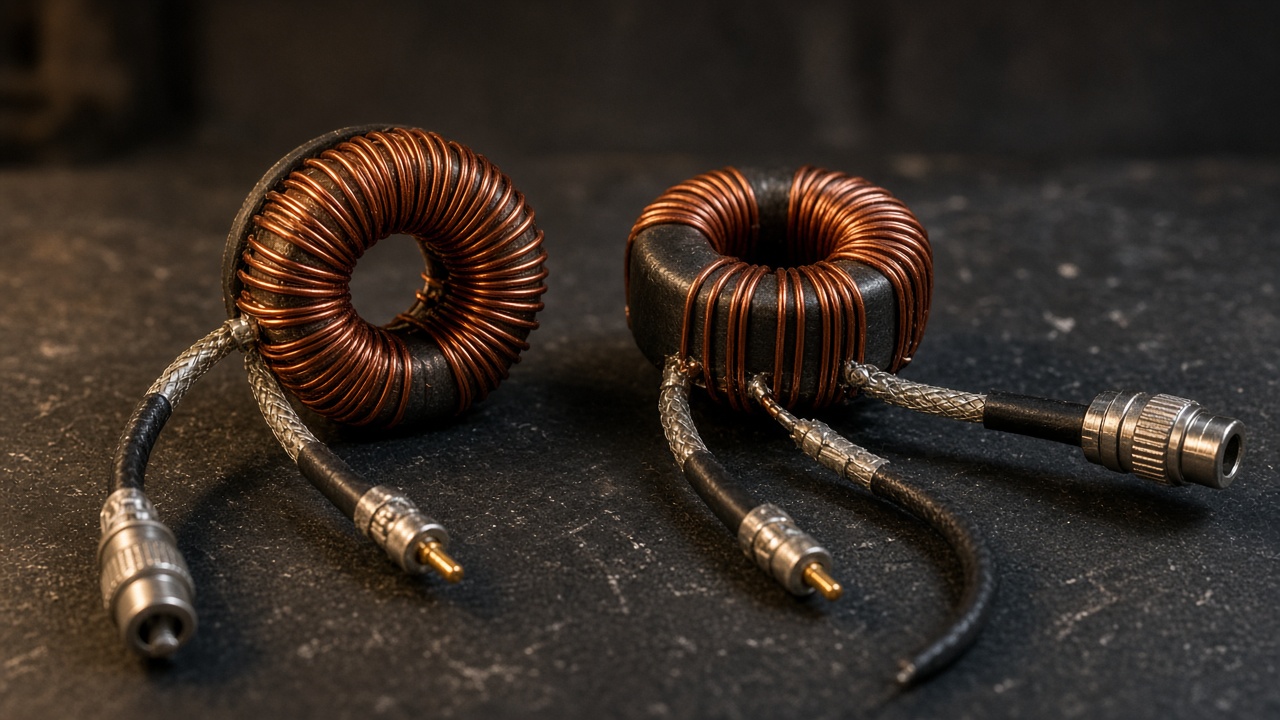
The unun vs balun choice is about the antenna and the cable, not about which box looks sturdier on the shelf.
A balun joins a balanced antenna to an unbalanced feed line. An unun sits between two unbalanced sides and, most of the time, changes the impedance while it is there.
Coax is unbalanced. A center-fed dipole is balanced. A vertical over radials is not. Get that pair right and a lot of “the shack is hot” problems calm down.
What a Balun Does
Balun is short for balanced to unbalanced. The everyday case is a dipole fed with coax. The two legs should carry equal and opposite current. The shield is the return path inside the cable, not a third wire of the antenna.
Leave the choke off and current runs down the outside of the shield. The feed line radiates, the pattern gets lopsided, and the SWR can jump when you move the cable. A 1:1 current balun is the usual fix. It keeps the antenna doing the radiating.
A 4:1 balun does the balanced-to-unbalanced job and transforms impedance. Off-center-fed dipoles often need that 4:1, because the feed point is no longer the low impedance of a center-fed half wave.
What an Unun Does
Unun means unbalanced to unbalanced. The antenna and the coax are both unbalanced, and the impedance still does not match. A random wire or another non-resonant end-fed wire is the usual example. A 9:1 unun is the common way to give 50-ohm coax a more reasonable load.
A vertical that is already near 50 ohms does not need a 9:1. It needs a choke at the base so the shield does not become a radial you did not plan. People build that choke as a 1:1 unun.
An unun does not turn one wire into a resonant antenna on every band. It gives the radio or the tuner a friendlier impedance. You still measure SWR. You still need radials or a counterpoise when the design calls for them.
Dipoles, verticals, and end-fed wires are sorted by job in Best Ham Radio Antennas. The cable between the box and the radio is its own project, covered in coaxial cable installation.
Which One Goes Where
Center-fed dipole and coax: a 1:1 current balun at the feed point.
Off-center-fed dipole and coax: a 4:1 balun.
Non-resonant end-fed wire and coax: a 9:1 unun, plus a counterpoise or other return path so the transformer has something to work against.
Vertical and coax, with the feed point already near 50 ohms: a choke at the base.
Dipole and window line: leave the feed point alone. The balanced line can run to the shack, and the balun goes where you change over to coax.
If you are unsure, look at the antenna you actually built. The feed line and the feed point decide the box. A higher ratio is not a better balun. It is a different impedance job.
When the Feed Line Is the Problem
RF in the shack, a tingle on the mic, and a computer that reboots on key-up are classic common-mode symptoms. Put the choke at the antenna first. A second choke where the coax enters the shack is a fair next step on a long run.
That same current is one way your own station makes noise in the house. Choking it is part of how you reduce RFI. If the SWR wanders when you move the cable, inspect the feed line and the connectors before you blame the band. Those checks are on Ham Radio Signal Problems.
A Few Easy Mix-Ups
A tuner is not a balun. It lives at the radio and makes the transmitter happy. The shield can still radiate.
Ladder line is already balanced. A dipole fed with ladder line does not need a balun at the antenna.
Ferrite mix and power rating matter when you build or buy the choke, because a tiny core will saturate and get hot. Match the part to your power and to the bands you use. Then confirm the result with an SWR reading and a contact, not with a hope.
Frequently Asked Questions
Do I need a balun on a dipole fed with coax?
Yes, in almost every home station. A center-fed dipole is balanced and coax is not. A 1:1 current balun at the feed point keeps current off the outside of the shield. Without it, the feed line can radiate, the pattern shifts, and the SWR can change when you touch the cable.
When do I use an unun instead of a balun?
Use an unun when both the antenna and the feed line are unbalanced. A non-resonant end-fed wire into coax is the common case, often with a 9:1 unun. A vertical that is already near 50 ohms usually wants a choke, sometimes built as a 1:1 unun, so the shield stays quiet.
What is the difference between a 1:1, a 4:1, and a 9:1?
The number is an impedance ratio, not a power rating. A 1:1 choke keeps the feed line from becoming part of the antenna. A 4:1 is a common match for an off-center-fed dipole, and a 9:1 is a common match for a non-resonant end-fed wire.
Can a tuner replace a balun?
A tuner cancels mismatch at the radio so the transmitter sees a load it can live with, and it leaves common-mode current on the coax shield untouched. You can need both. The choke belongs at the antenna, and the tuner belongs where the radio needs a friendlier impedance.