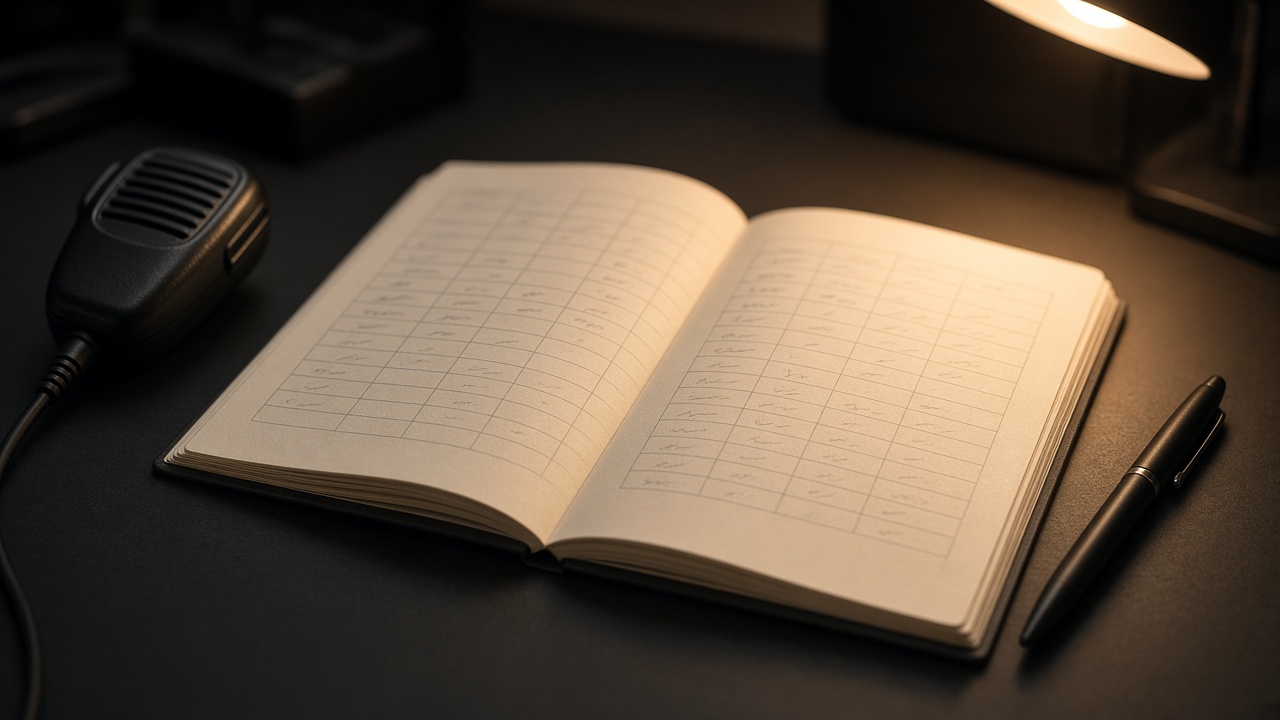
A QSO log is the list of stations you have actually worked. Each line is one contact. The line is boring on purpose, and that is why you can trust it later.
People keep logs to chase awards, to submit a contest, and to remember the station they worked at 2 a.m. on a noisy band. The log is also how you notice that your antenna works better before sunset than after.
Write it down while you still remember the call sign. A log you meant to fill in tomorrow is a story, not a record.
The Fields That Matter
Every line needs the date and the time in UTC. Local time feels natural and will betray you the first time someone in another zone asks what hour you were on. UTC is the same hour for both of you.
Add the band or the frequency, the mode, the call sign, and the signal report. RST is the report you send and the one you receive. If they told you their name, their state, or a grid, put that in too. A blank note field is where “portable on a hill, heavy static” belongs.
Use the same order every time. A paper page and a computer record can hold the same facts. Mixing formats is how a confirm request comes back wrong.
Digital contacts feel like they log themselves. Check the row. FT8 and PSK31 programs will store a call sign you never finished working if you click in a hurry.
Paper
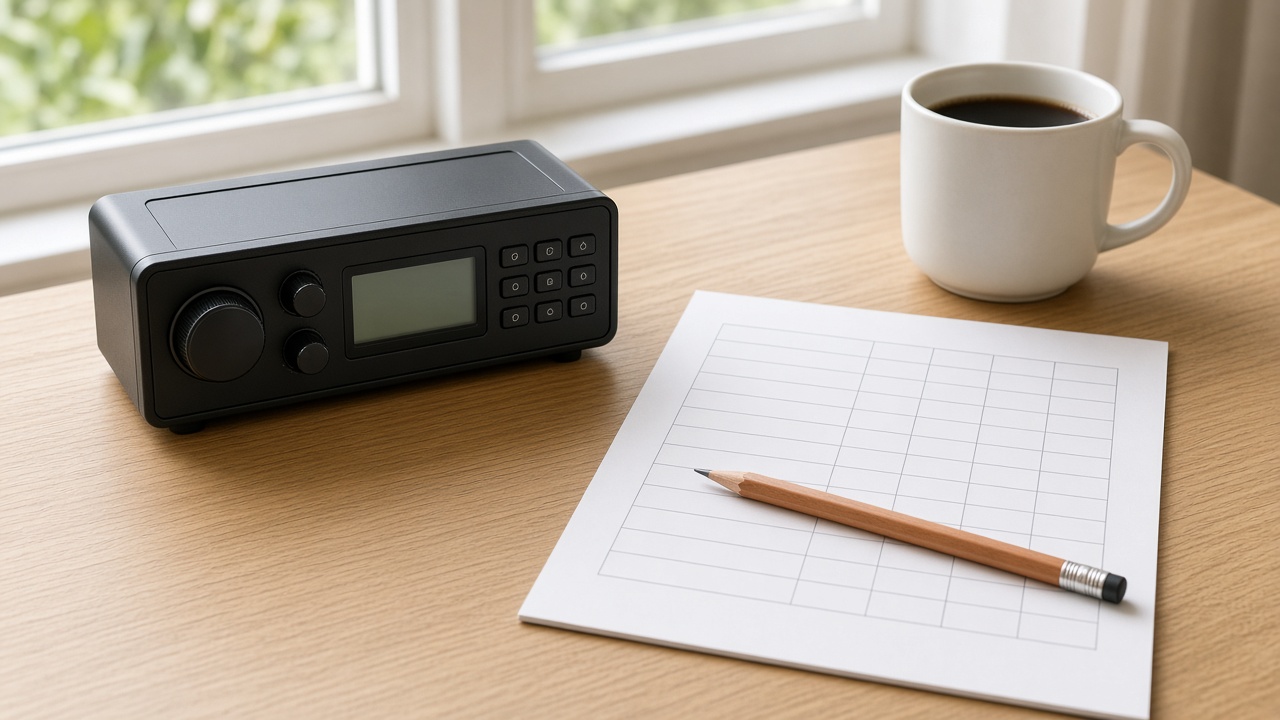
A bound logbook still works. Columns for date, time, frequency, mode, call sign, and RST are enough. It needs no battery, and it will not fail a software update on a Saturday.
The limits are real. Searching a paper book for one call sign means turning pages. A spilled drink is a bad backup plan. Awards that want an electronic file will make you type the pages in later.
For a portable afternoon or a first contest, paper is a sane choice. Photograph the pages when you get home if that log is the only copy.
A Computer Log
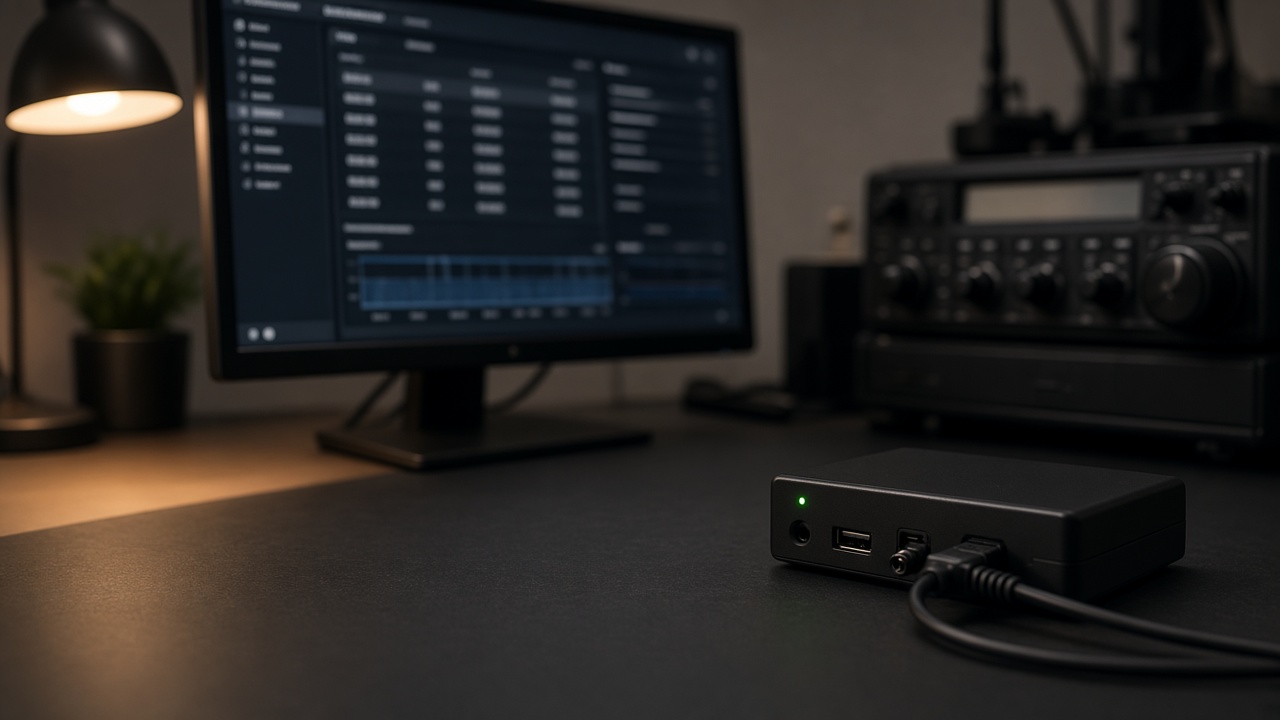
Ham Radio Deluxe, Log4OM, and N1MM Logger+ are the programs operators already pass around. Log4OM fits day-to-day operating and awards. N1MM Logger+ fits contests. Ham Radio Deluxe wraps a log into a larger paid suite. Pick from that set in best ham radio software instead of collecting six half-used loggers.
CAT control fills in the frequency and mode from the radio, which removes a whole family of typos. You still type the call sign, or you confirm the one a digital program handed you.
ADIF is how you move contacts from one program to another. Cabrillo is the export a lot of contests want. If a program cannot write both, you will feel it the week an award or a ham radio contest asks for the file.
Keep a copy off the machine you operate from. A second disk or a copy in cloud storage is enough. Find out how to restore it once, on a quiet day.
Confirmations and Awards
DXCC and Worked All States are the award names you will hear first. Both of them are a stack of confirmed contacts. The log is the stack. The confirmation is someone else agreeing that the contact happened.
Logbook of The World does that match for ARRL awards. You upload a log, the other station uploads a log, and the two lines meet. eQSL is the other electronic route. Paper cards still matter for stations that answer them and for awards that have not moved on.
Upload the contacts you really made. A busted call sign confirmed in a hurry is worse than a missing one. If you are not sure of the suffix, leave the line out until you are.
The FCC does not make a U.S. ham keep this diary for an ordinary contact. Keep it because future-you will want it, and because the award desk will ask.
Frequently Asked Questions
What has to be in each line?
Date, time in UTC, the band or the frequency, the mode, the other station's call sign, and the signal report. A name, a state, or a grid is worth adding when you were given one. If you might want to remember the contact, add a note.
Do I have to keep a log?
United States amateur rules do not require a log for everyday contacts, though some other countries do. Contests and award programs require one, because the log is the proof. Most operators keep one anyway, as the diary of the station.
What is ADIF?
ADIF is the file format logging programs use to trade contacts. Export ADIF from the program that made the contact and import it into the program that tracks the award. Cabrillo is the plainer text format many contest sponsors ask you to upload.
How do I confirm a contact for an award?
Logbook of The World, run by the ARRL, matches your log against the other station's log. eQSL does the same kind of electronic card. A paper QSL card still works when the other station answers one. The contact has to be in your log before any of those can confirm it.