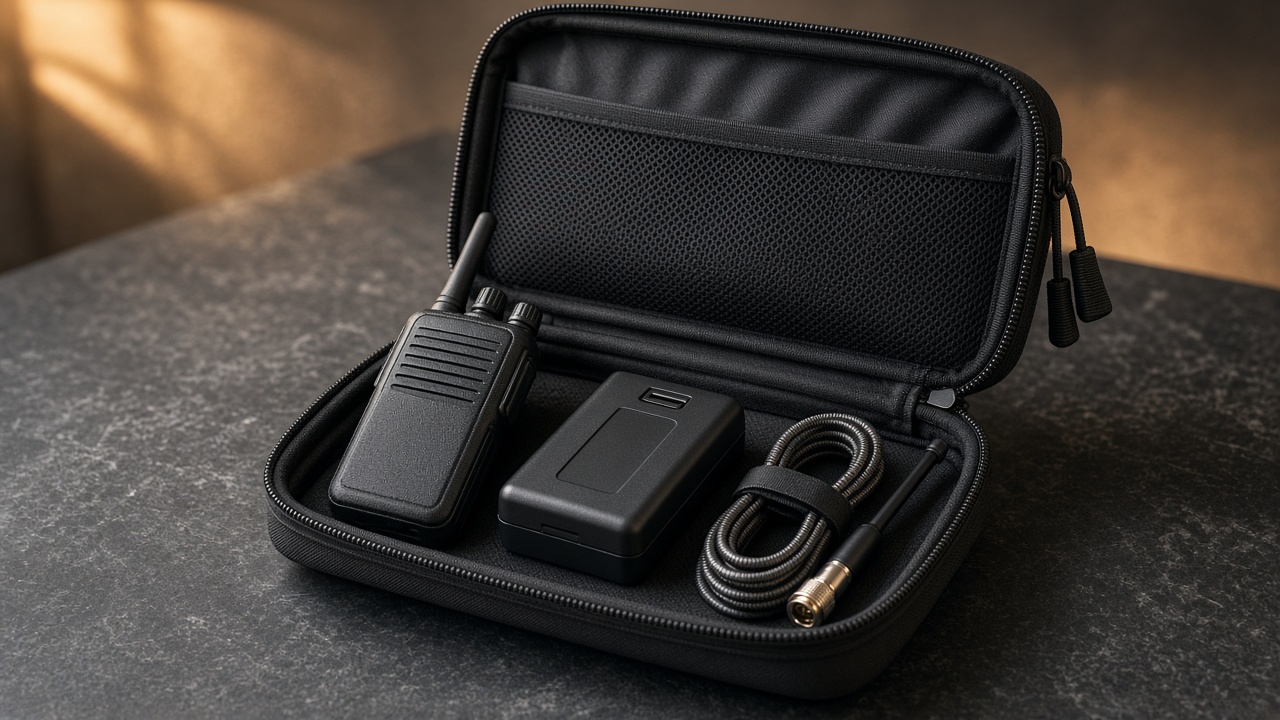
A ham radio go kit is the bag you can pick up and operate from, without a trip back to the shack for the cable you forgot. It is for emergencies, public-service events, and any time you have to leave in a hurry.
Keep it to a radio that works, power for that radio, an antenna you can put up fast, and the small tools that connect them. If you have never set it up, it is a box of good intentions.
Pack for the help you are likely to be asked for. Local VHF voice covers a lot of it. Add HF only after you are licensed for it and you have already done it on purpose.
The Radio
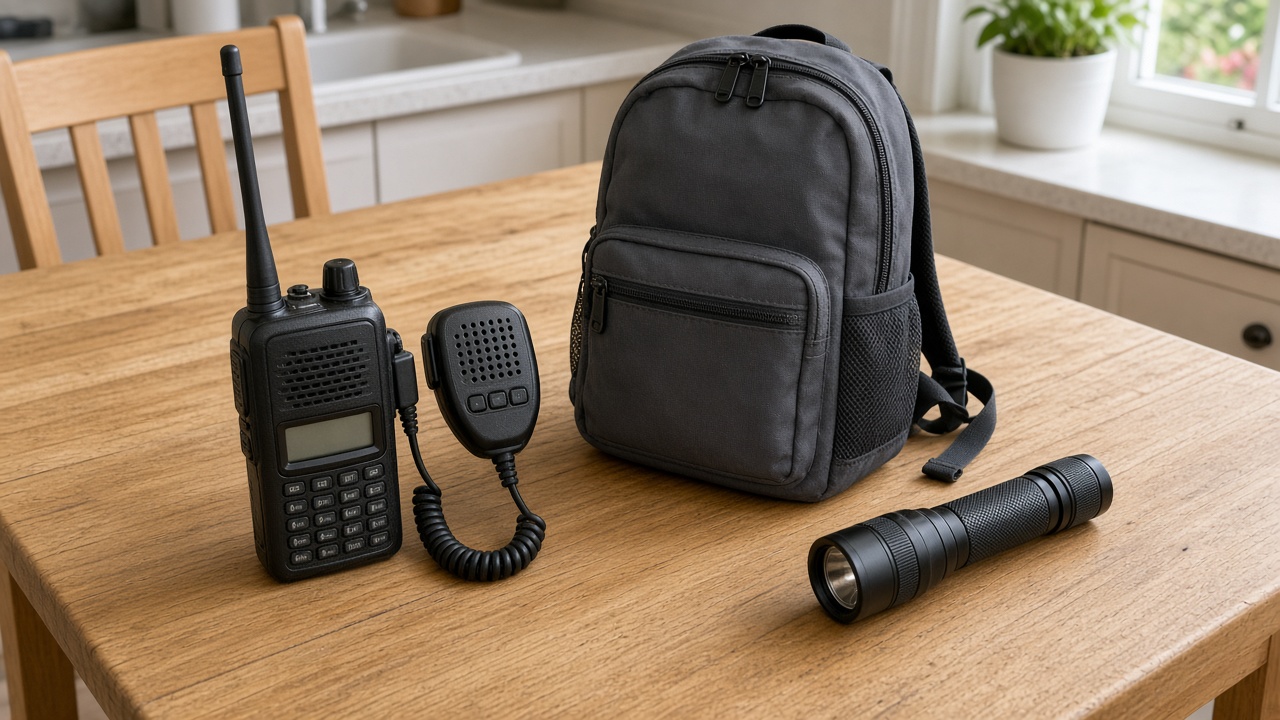
A handheld on 2 meters and 70 centimeters is the core for most people. It runs from a battery and reaches the local repeaters. Pack a card with the channels you programmed, and a spare microphone if that mic can fail on its own.
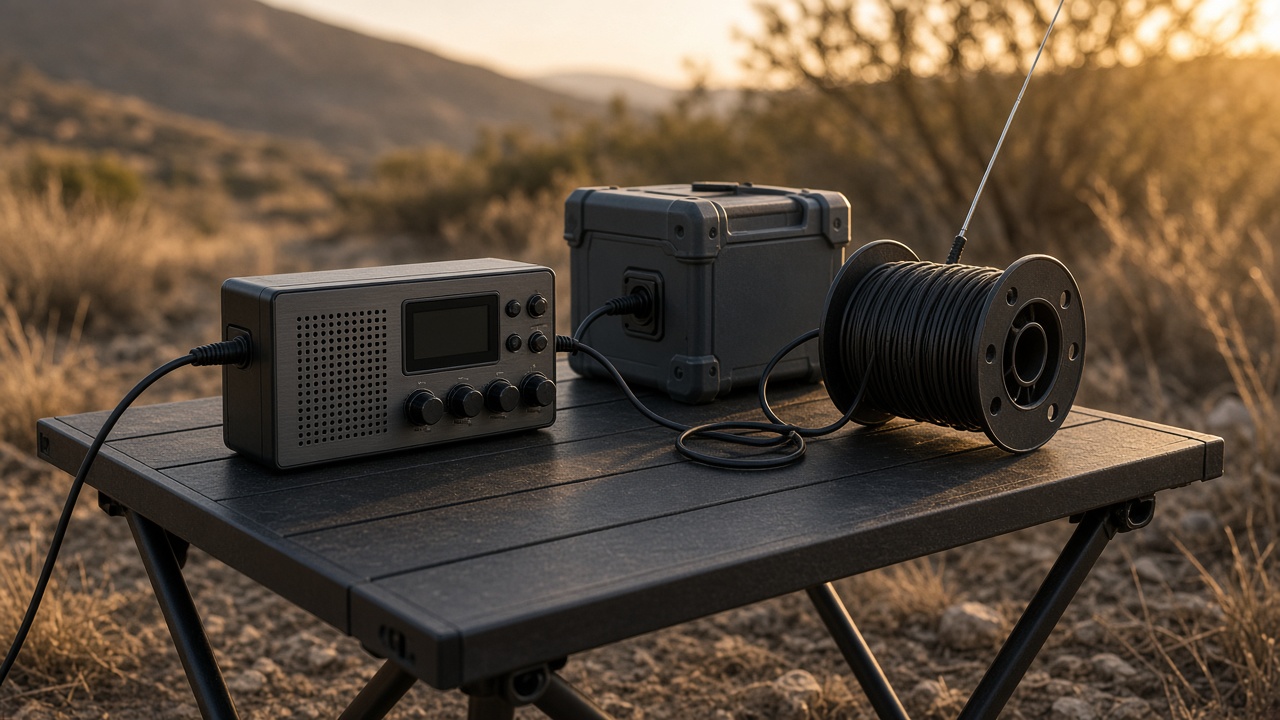
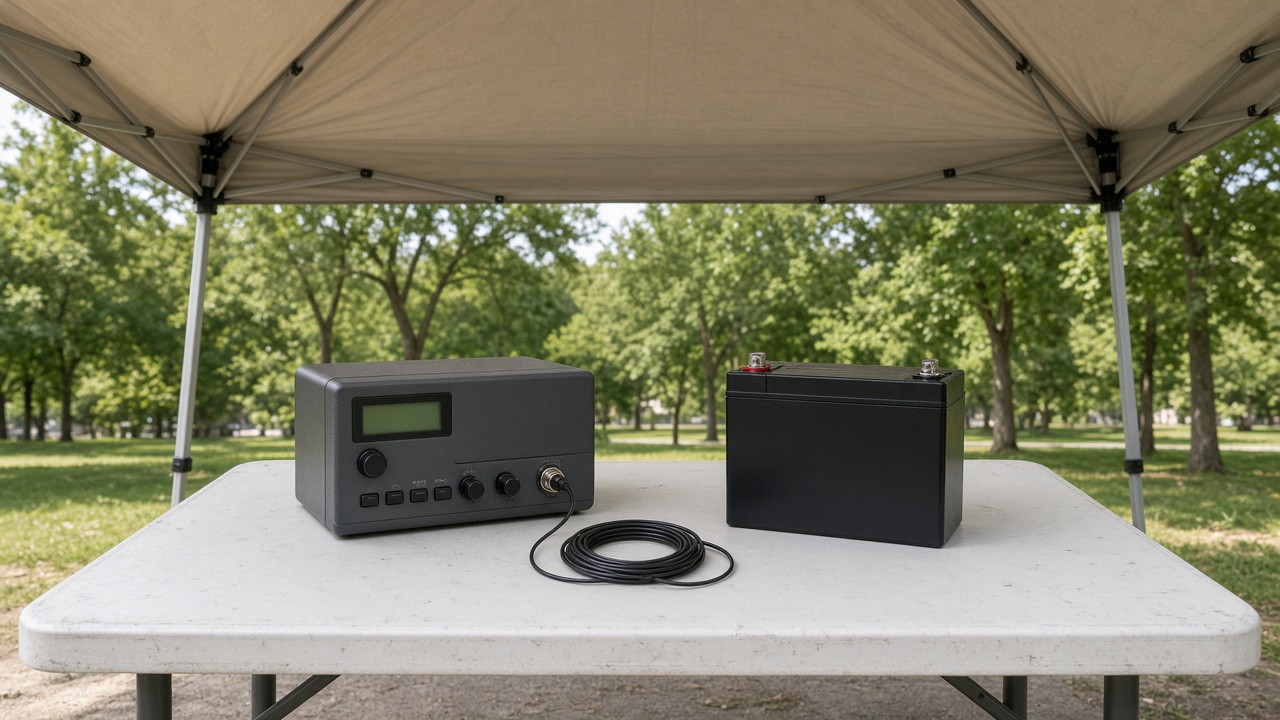
A mobile radio and an external battery are the step up when you need more than the handheld can do. An HF radio goes in the kit after you have run that same radio away from the desk. The first time you figure out HF should be a practice session.
Bring a copy of your license and a way to log. Paper does not need a charge.
Power for the First Hour
Spare packs for the handheld come first. If the radio accepts alkaline cells, pack that holder and a set of cells so a flat lithium pack is not the end of the day. A mobile radio needs a fused lead that can clip to a car battery.
A small solar panel can refill a battery on a long assignment. It will not rescue a kit you have never timed. Charge everything on a schedule, and mark the date where you will see it.
The home version of this choice is a ham radio power supply. In the bag, you are choosing batteries and the leads that connect them when there is no workbench.
Antennas You Can Raise Fast
The rubber duck is the backup. Pack a better handheld antenna, and a roll-up or a magnetic-mount antenna for when you can get height or a metal surface under it.
Bring coax that already has connectors, plus the one adapter you know you need. A short mast, some rope, and a way to stake a wire matter if you run HF. A multitool beats a perfect antenna you cannot support.
Which antenna belongs in the bag depends on the bands you will use. The longer explanation is Best Ham Radio Antennas. For a go kit, the test is simpler. Can you put it up in a few minutes, and have you heard it work?
Program the local repeaters before the kit goes on the shelf. Offset, tone, and a simplex channel are the minimum. How those machines are listed is covered with ham radio repeaters.
The Rest of the Bag
A flashlight that lives in the bag, not one you promise to add later. A small first-aid kit. Rain gear, gloves, water, and something to eat. A pen. Tape. The multitool.
Keep radio gear, power, and personal items where you can find them in the dark. Label the coax. A card with net frequencies and a simplex channel is worth more than another gadget you have to remember how to use.
Prove the Bag Works
Set the kit up at home on a timer. Write down what was missing. Fix the bag, then do it again after the batteries have had time to sit.
Field Day and local drills are the dress rehearsal. So is an afternoon with the portable ham radio setup you think you will carry. Groups that train for the day the phones fail are doing amateur radio emergency communication. The go kit is the piece you control before that day.
Frequently Asked Questions
What belongs in a first ham radio go kit?
A handheld for 2 meters and 70 centimeters, spare batteries, a better antenna than the stock whip, coax that already has connectors, and a card with your channels. Add a flashlight, a pen, a multitool, rain gear, water, and a copy of your license. Put HF gear in the bag only after you have already used that radio away from home.
How do I power the kit away from the house?
Start with a charged pack and a spare, and pack an alkaline-cell holder if the radio accepts one. A mobile radio needs a fused lead that can run from a car battery. A small solar panel can refill a pack on a long assignment, so charge the kit on a schedule before a dead battery wastes the first hour.
Which antenna should I pack?
Treat the rubber duck as the spare. Pack a more effective handheld antenna, plus a roll-up or a magnetic mount for when you can get some height or some metal under it. Bring one adapter you know you need, and rope or a short mast if the antenna wants support. The right antenna is the one you have already heard work, and the one you can put up in a few minutes.
How often should I test the kit?
Set it up at home until you can do it without hunting for parts. Do it again after the batteries have sat for a while. A club drill or Field Day is a good full test, because you find the dead pack and the missing adapter while the stakes are low. Update the channel card when the local repeaters change.