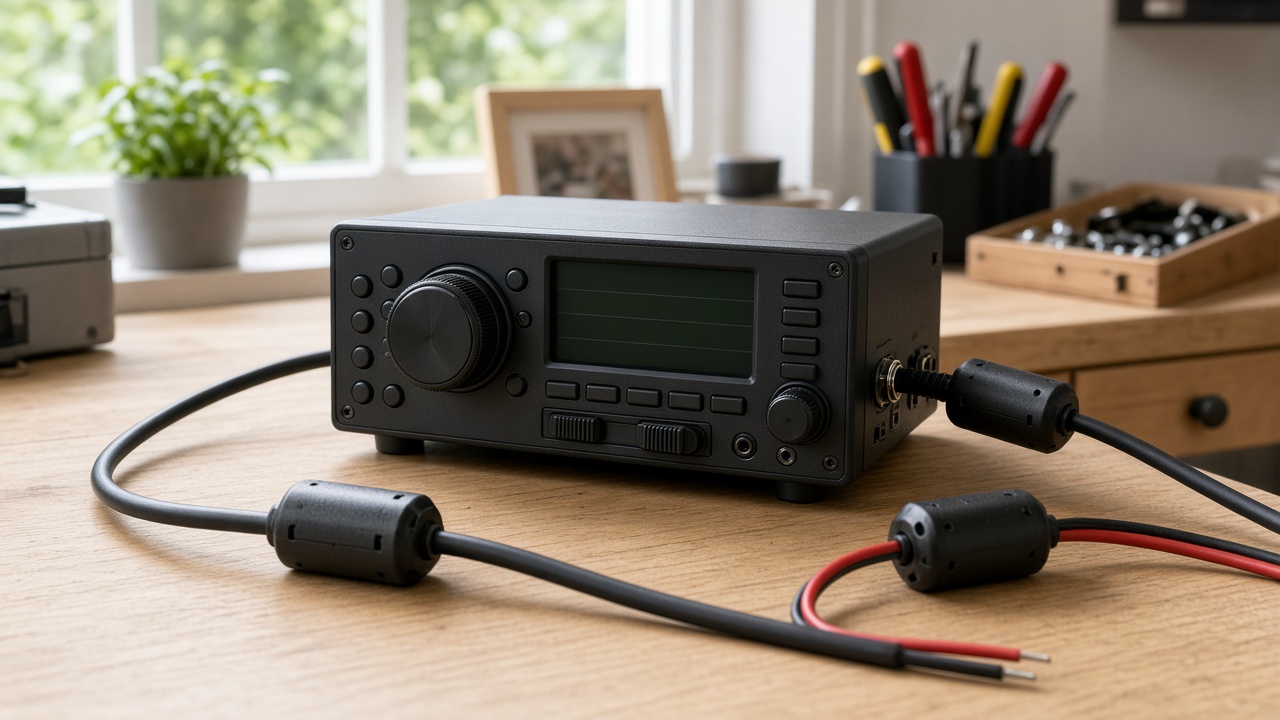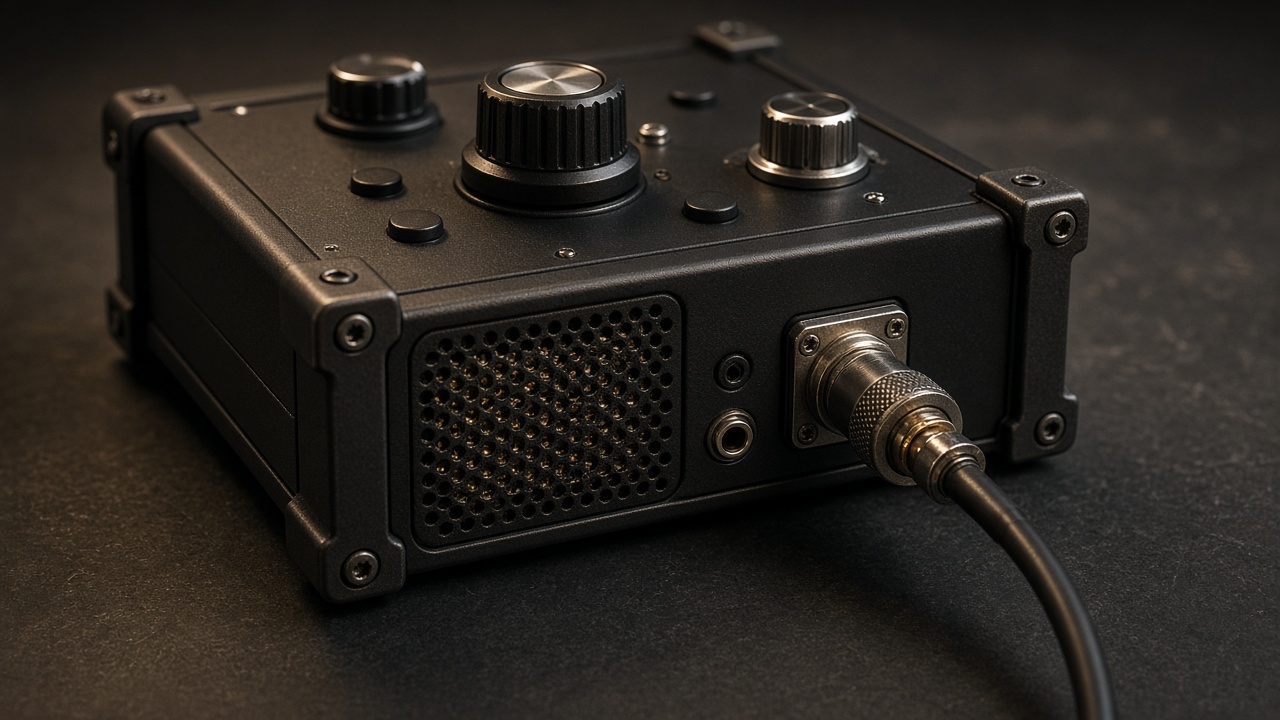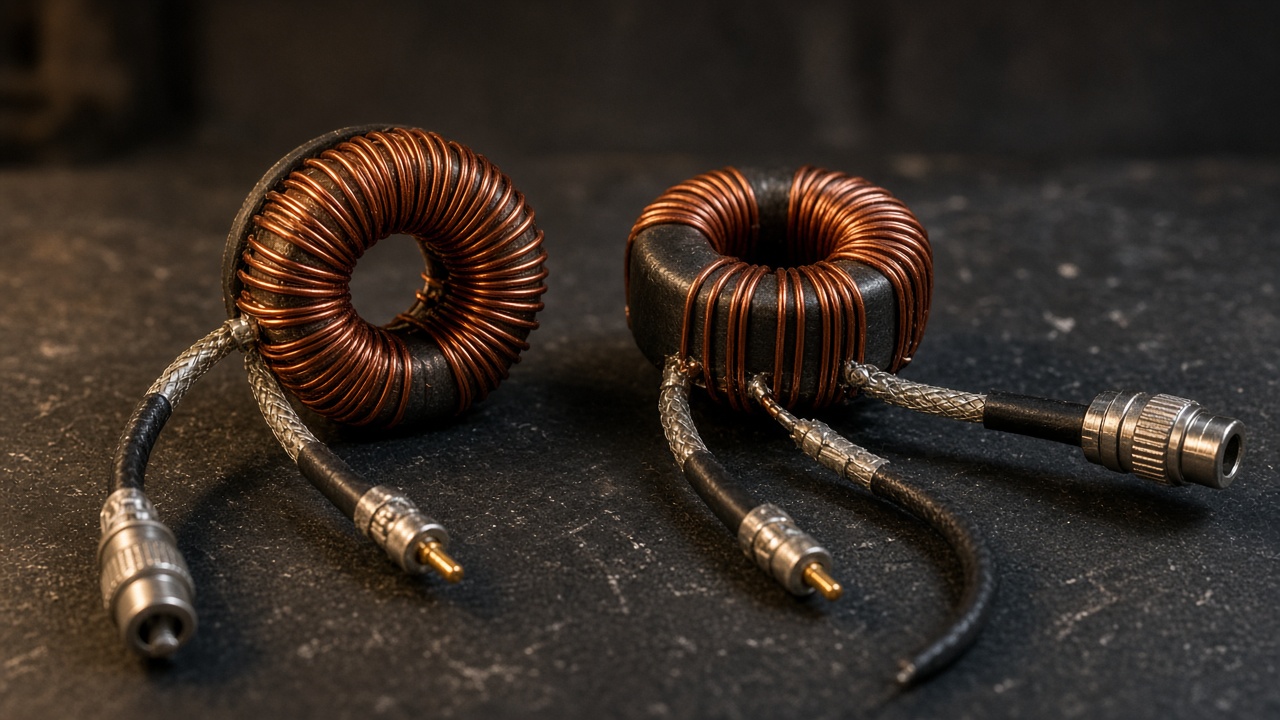
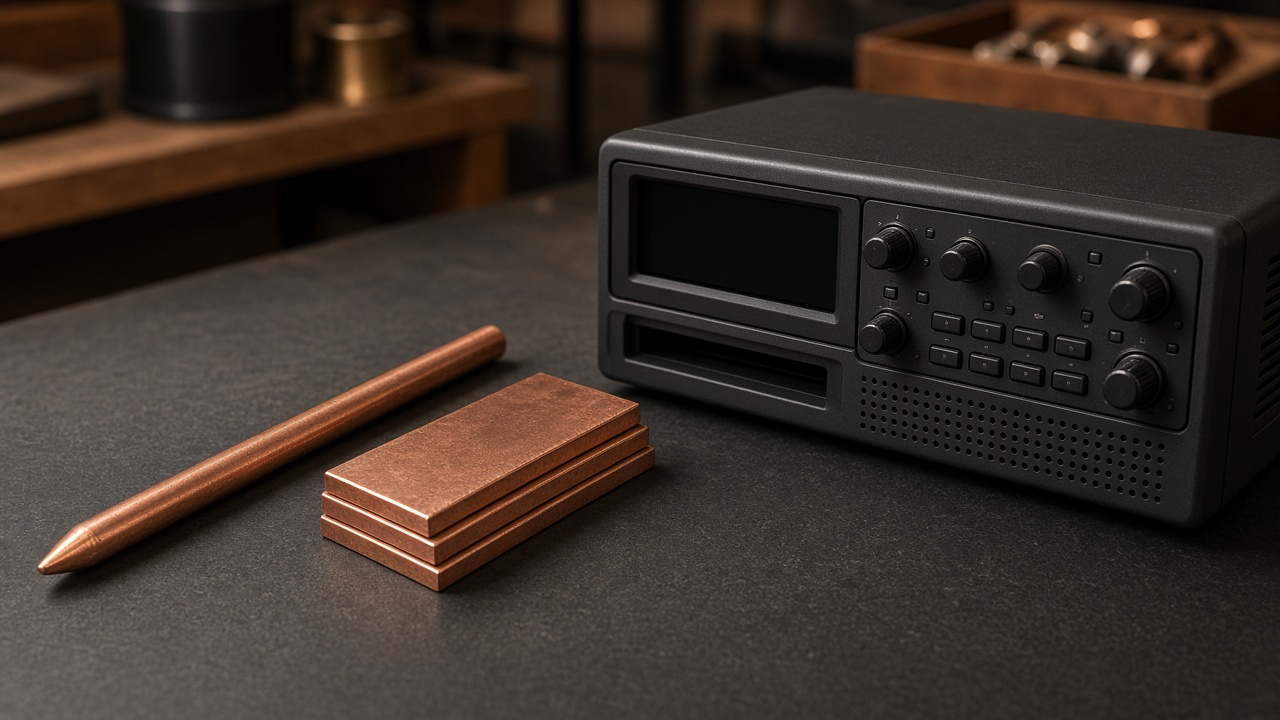
Ham radio grounding does three jobs, and they are not the same job. It gives a fault current a way to trip the breaker. It gives lightning a path that is not your radio. It gives stray RF somewhere to go besides the microphone.
A random wire from the radio to a cold-water pipe is not a system. One bonded point is.
Do the safety bond and the lightning path first. A quieter receiver is a welcome side effect.
Three Jobs People Lump Together
The electrical safety ground is the one already in the house wiring. If a hot lead touches a chassis, current should return on that path and open the breaker.
The lightning ground is for the mast, the coax entry, and anything else that can carry a strike or a nearby hit into the building. It wants a short, heavy conductor into the earth, outside, before the energy reaches the desk.
The RF bond is about common-mode current. A ground rod will not stop a feed line from radiating. A choke at the antenna does that. Bonding helps once that current is back at the shack and you want it off the mic shell.
One Point, Then Outside
Pick one bond for the station. A copper bar where the cables enter, or at the operating position, is the usual choice. Run a lead from each radio, supply, and amplifier to that bar.
From the bar, run a heavy copper conductor outside to a ground rod driven into the soil. Use copper that can carry a fault, not a scrap of thin hookup wire. Keep outdoor clamps on bare metal, tight, and made for the weather.
Bond that station ground to the house electrical ground, usually at the service. Separate electrodes can sit at different voltages, and the gear between them takes the hit. The ARRL’s grounding page is the reference to read next to your local electrical rules.
The Mast and the Coax Entry
Ground the mast with its own heavy conductor to the earth electrode. Strike current should reach soil without a detour through the transceiver.
Where the coax enters, use a feed-through and an arrestor bonded to the same system. The shield meets that bond outside. A pretty connector on an unbonded hole is still an open door. Routing and weatherproofing the cable is part of coaxial cable installation.
Mistakes That Keep Coming Back
Daisy-chaining equipment, so one loose lug lifts the ground on everything downstream.
A painted surface under the lug, or a rusty clamp that looks connected and is not.
An ungrounded mast, because the weather has been kind so far.
A station ground that was never bonded to the service ground.
A counterpoise wire treated as lightning protection. A counterpoise is part of an antenna. It is an RF conductor, and it is not a safety electrode.
Noise that is still there after the bond is tight is an interference hunt. Start with how to reduce RFI. A radio that misbehaves only on transmit may be the feed line. Those steps are on Ham Radio Signal Problems.
Keep the Bonds Tight
Look at the outdoor clamps a couple of times a year. Copper and steel corrode, and a loose bond has stopped being a bond. After any antenna work, confirm the mast lead and the entry panel are still on the same system.
When you add a radio, land it on the same bar. A second private ground is how loops sneak back in.
Frequently Asked Questions
Why does a ham station need its own ground?
The house safety ground protects you if a hot wire touches a chassis. Outdoor antennas also need a heavy path to earth for lightning and for nearby strikes. Stray RF on the feed line is a third problem, and a rod in the yard will not fix it by itself. A single bonded system covers the safety and lightning jobs together.
Should I daisy-chain my radios to ground?
Run a separate lead from each piece of gear to one bond bar. Daisy-chaining the radio to the tuner to the supply leaves every connection in the path of the next one, and a loose screw breaks the whole chain. From that one bar, go outside to the ground electrode in as short a run as you can manage.
Do I have to bond the station ground to the electrical panel?
Yes. Separate grounds can sit at different voltages during a fault or a strike, and that difference shows up across your equipment. Bond the station electrode to the house grounding electrode system. Follow your local electrical rules, and read the ARRL grounding page before you drive rods.
Will a better ground lower my noise floor?
Sometimes, if the noise was stray RF on the station wiring. It will not silence a bad lamp, a solar inverter, or a power line down the street. Hunt those sources directly. Use the bond for safety and for RF that has already come back to the shack, and use a choke at the antenna to keep the shield from radiating.