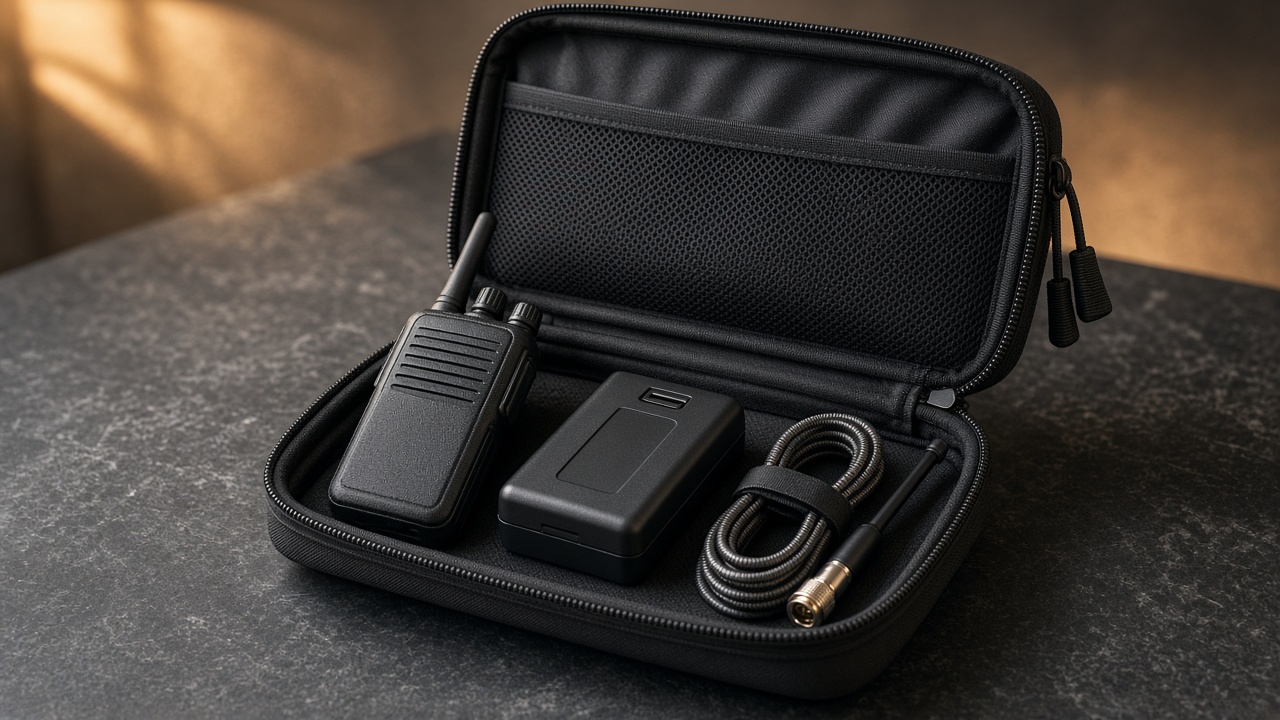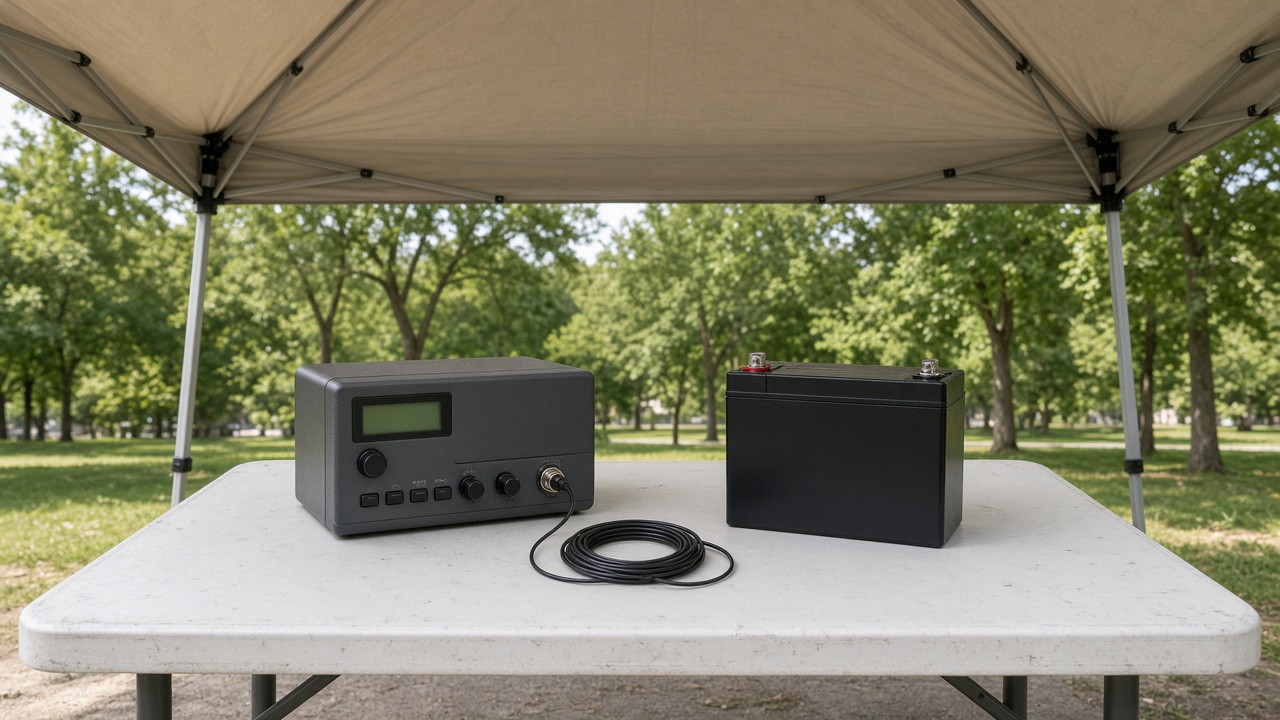
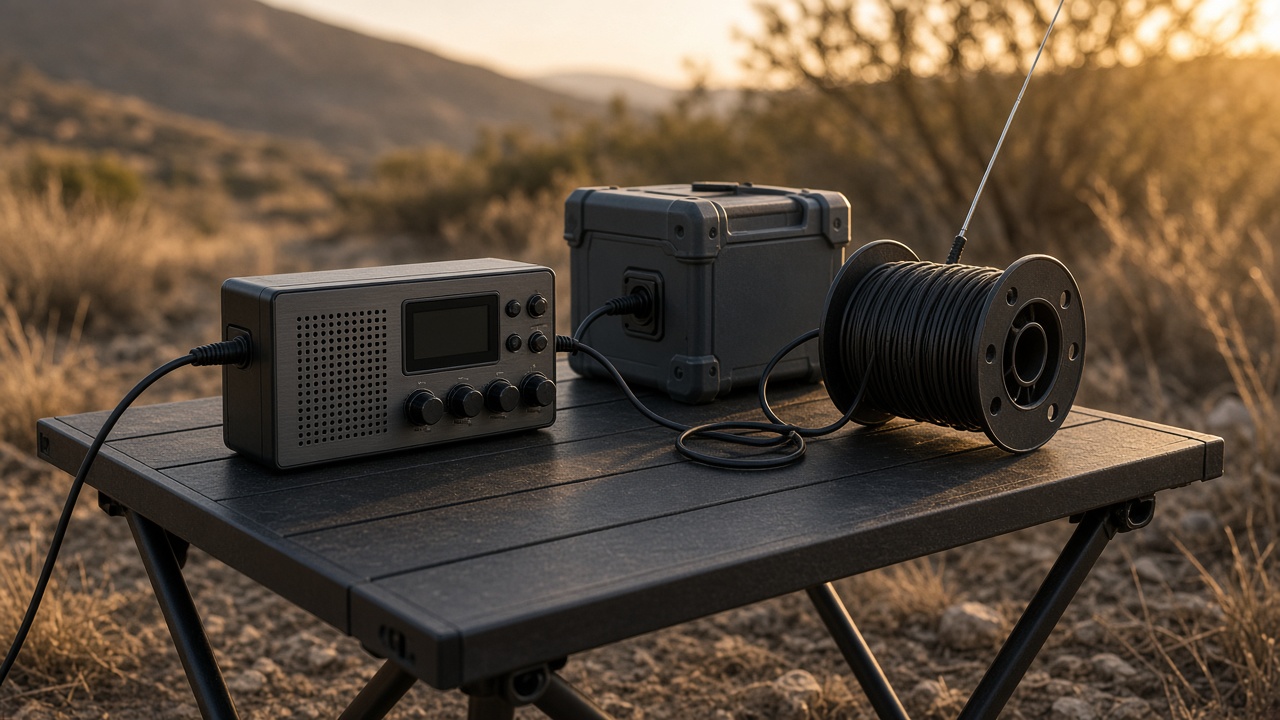
A portable ham radio setup is a station you can carry away from the house and put on the air without a wall outlet. The fun is the contact from somewhere else. The work is packing so you can actually make it.
Keep a radio, a power source, an antenna you can raise alone, and the cables that connect them. If the first trip needs a wagon, you packed the home station.
Use it in the backyard, on a hill, at a club event, or on a support assignment. Practice the setup at home before you need it somewhere less convenient.
The Radio
A VHF and UHF handheld is the smallest station. It runs on its own pack and talks to local repeaters. A mobile radio in a box, run from an external battery, gives you more power and a sturdier antenna connector.
For HF, a compact transceiver is enough. Lower power is easier to feed from a battery, and on HF the antenna does more than the last few watts. Bring the microphone, a spare fuse, and a way to log. Paper works. A phone works if you counted the phone in the battery budget. Keeping that log useful is what a QSO log is for.
Power Away From the Wall
A battery is the default. Lithium iron phosphate packs are popular because the voltage stays in a range radios like and because they tolerate cycling. A sealed lead-acid battery works too. It is heavier, and running it flat shortens its life.
A small solar panel can refill a battery in daylight. It is quiet. It is also slow, so treat it as a helper until you have watched it keep up with the way you operate.
A generator fits a group or a long support job, when batteries will not cover the radio and the lights. It is loud and it needs fuel. It is a poor choice for a solo afternoon.
Look up the radio’s transmit current and pack for that, plus some time left over. How to think about current, including a DC source you take with you, is the ham radio power supply question.
The Antenna
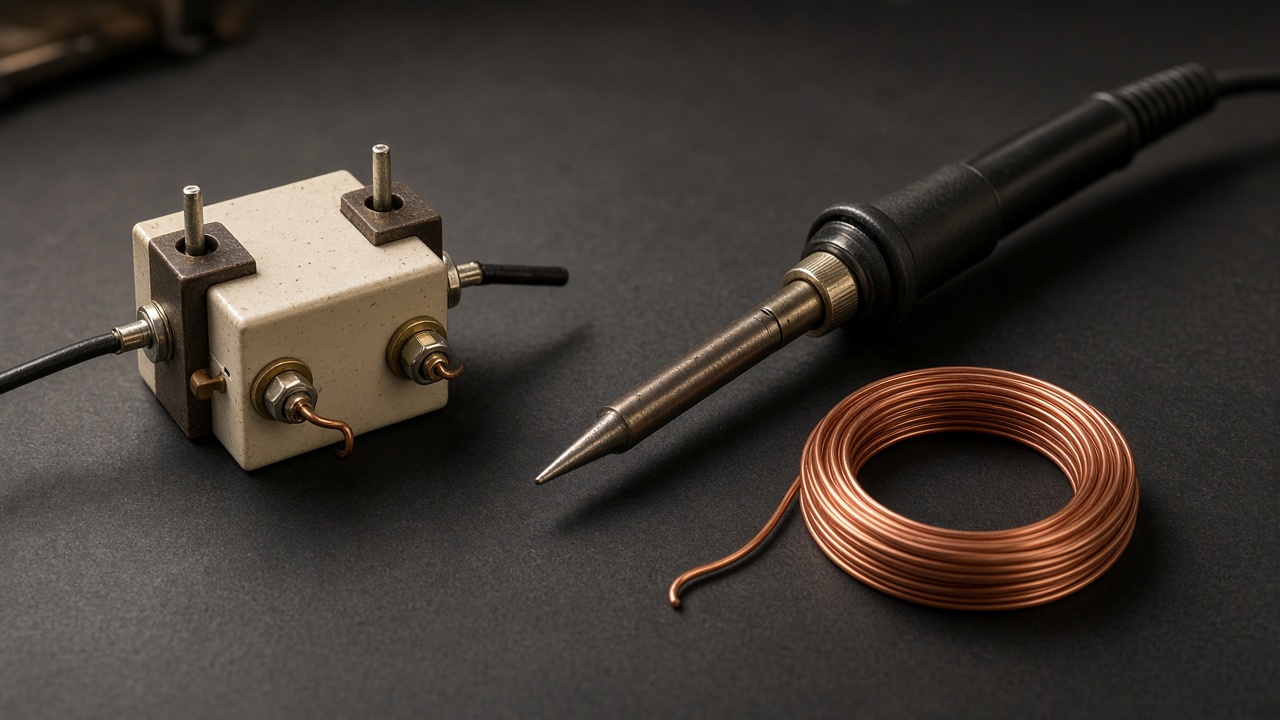
Pick an antenna for the bands you will use and for the minutes you want to spend putting it up. A roll-up dual-band antenna or a small vertical is plenty for VHF. On HF, an end-fed wire, a linked dipole, or a telescoping vertical is the usual kit.
Get it as high and as clear as you safely can. A fiberglass mast or a tree is enough support. Stay away from power lines. If you cannot raise it by yourself, leave it at home.
Antenna types for home and for the field are sorted in Best Ham Radio Antennas. Bring coax you measured at home, not a mystery jumper from the junk box.
Pack So You Can Find It
Group the radio, the power gear, and the antenna so setup has an order. Antenna first, then power, then the radio. Tear down in reverse.
Do one full setup on the back porch. The missing adapter shows up there, which is where you want it. Label the coax. Toss in tape, a multitool, a pen, and a way to keep the radio dry.
A tighter pack, built to leave in a hurry, is a ham radio go kit. The portable station can be that kit, or it can be a little more comfortable when you are not on a timer.
Where This Station Gets Used
Club events and Field Day are built around stations that are not in a shack. Emergency groups use the same radio, battery, and wire when phones are not enough. That work is amateur radio emergency communication.
You do not need an event. One afternoon with a battery and a wire will teach you more about your station than another hour of shopping. Set it up, make a contact, and write down what you forgot.
Frequently Asked Questions
What do I actually need in a portable station?
A radio for the bands you will use, a battery that can run it on transmit, an antenna one person can put up, coax you already tested, and a way to log. A microphone, a spare fuse, and a way to keep the radio dry belong in the same bag. Leave the rest of the shack at home until a real contact proves you need it.
What battery should I carry?
A lithium iron phosphate pack is a common choice because the voltage stays usable and the pack can be cycled, and a sealed lead-acid battery also works at the cost of extra weight. Size either one for the radio's transmit current and for how long you want to operate. A solar panel can top a battery up, though it is slow, so watch it once before you depend on it.
Which antenna is easiest to carry?
On VHF, a better-than-stock whip or a small vertical is enough. On HF, an end-fed wire, a linked dipole, or a telescoping vertical is the usual kit. Use a fiberglass mast or a tree, and stay clear of power lines. If you cannot put it up by yourself, it is the wrong antenna for this station.
How is this different from a go kit?
A portable station is the same idea with a little more room to breathe. You might take a more comfortable chair, a longer wire, or a radio you do not want bouncing in a rush bag. A go kit is packed to leave quickly and to be complete in the dark. Build the portable station first, then slim it down if you need the fast version.