The practical way to reduce RFI is to find the source, then block the path into the radio. Buying filters before you know what is loud is how a shack stays noisy.
RFI is a radio signal you did not ask for. It can ride in on a wire, or it can arrive through the antenna. It can sit there all day, or it can show up only when a lamp, a charger, or a furnace kicks on.
Your own transmitter can be the source. RF on the coax shield gets into speakers, computers, and the neighbor’s gear. That is a station problem.
What You Are Hearing
A steady hiss across a whole band is different from a buzz that pulses, a whine that moves, or a birdie on one frequency. Write down the band, the time of day, and whether it stops when you unplug something.
Power-line noise is often a rough buzz that follows the mains. Cheap LED lamps and phone chargers tend to throw a hash that comes and goes with the switch. A solar inverter can put a broad mess on HF whenever it is running. Computers, monitors, and wall supplies do the same job from inside the shack.
Static crashes and a band that fades with the Sun are propagation. You change bands or you wait. You do not ferrite the weather.
Find It First
Kill breakers one at a time while you listen. If one breaker kills the noise, unplug devices on that circuit until the noise stops. That beats a week of theories.
A handheld, or a plain AM broadcast radio, is a decent sniffer. Tune to the junk and walk. It gets louder as you get closer to the lamp, the supply, or the service drop.
If the noise survives with the whole house off, it is outside. A small loop can show a direction. Power-line hardware and a neighbor’s inverter are the usual finds. Bring the portable radio so they can hear what you hear. The ARRL’s RFI page is the reference when the utility has to be involved.
Fixes That Earn Their Keep
Move the antenna and the radio away from the noisy box. Distance is free and it works.
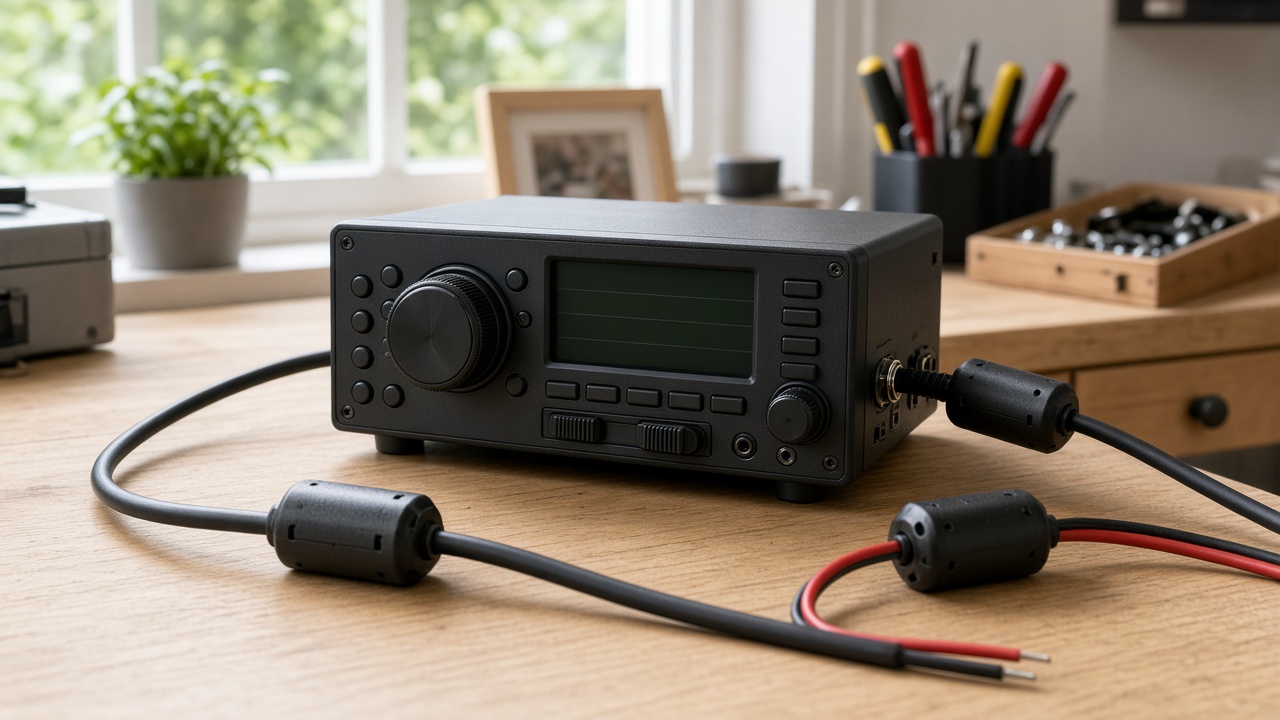
Snap ferrite chokes onto the cable that carries the noise, close to the noisy device and again at the radio. Power cords, USB leads, and the coax where it enters the shack are the usual places.
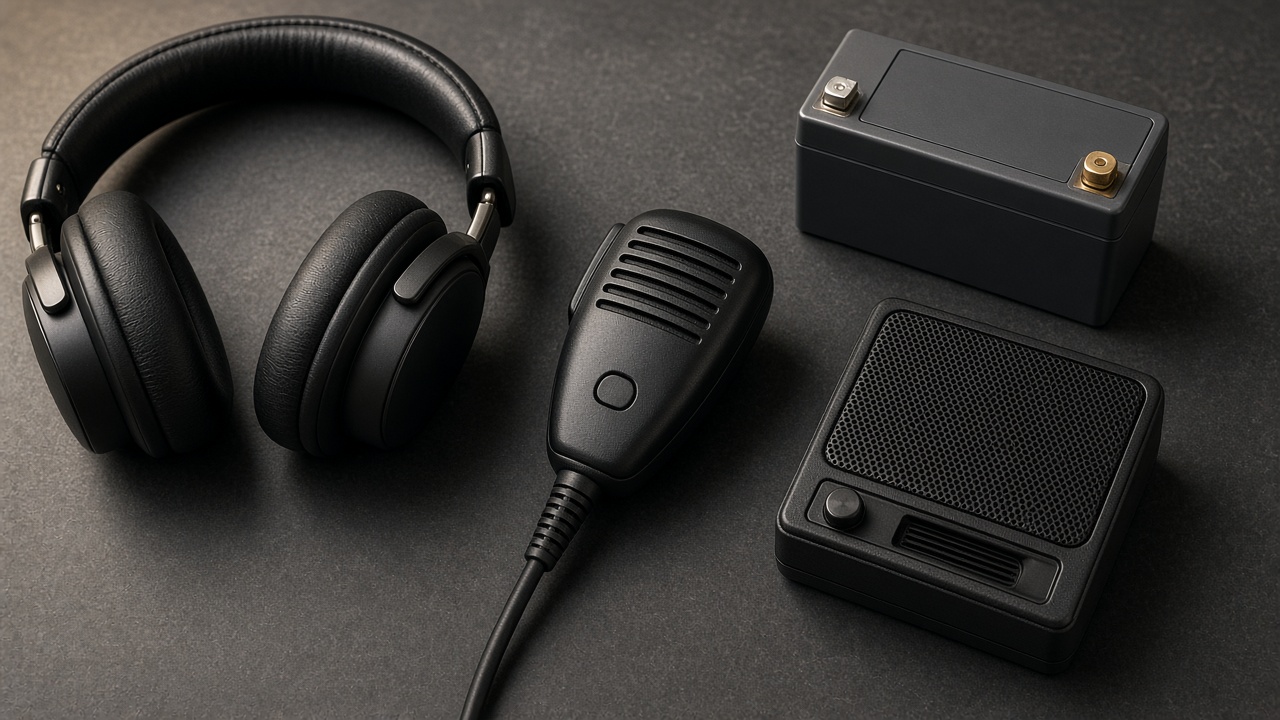
Run the station from a supply that is quiet on the bands you use. A switching supply can be fine, or it can be the loudest box in the room. That choice is part of picking a ham radio power supply.
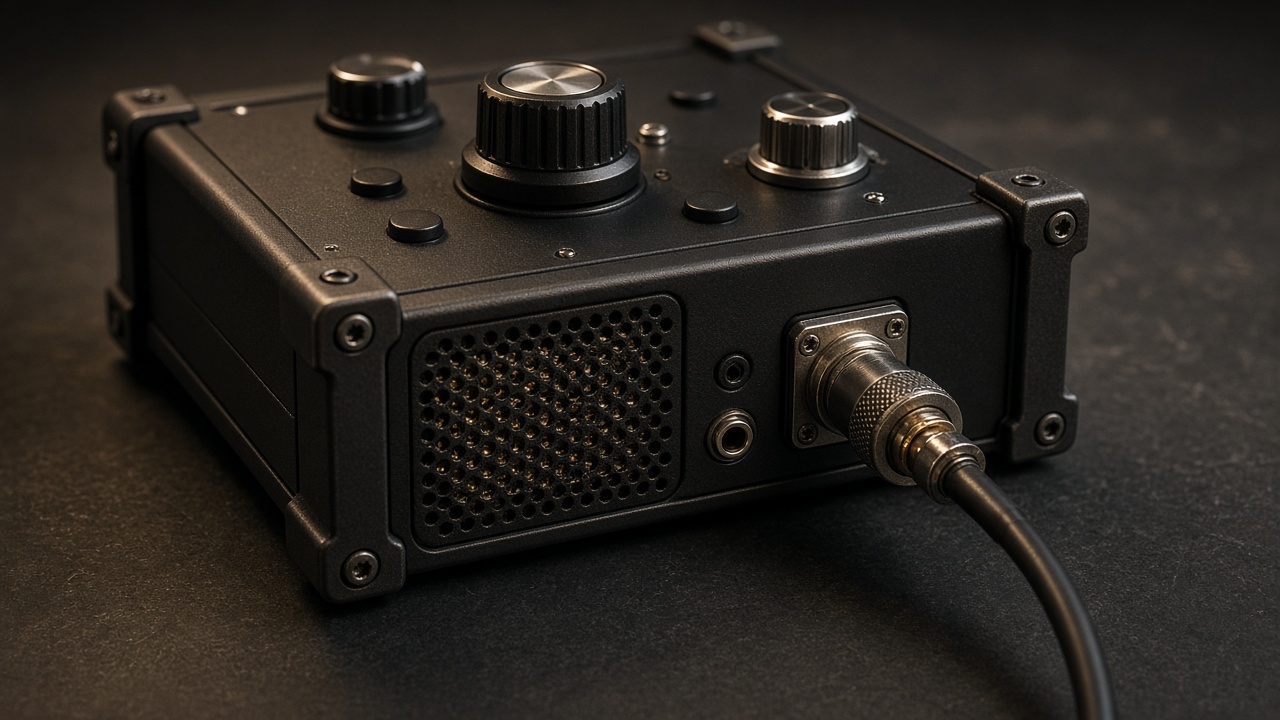
Give stray RF a bond that is not your microphone shell. That is ham radio grounding.
If the noise is common-mode current on the feed line, choke it at the antenna. The right part for that job is covered in Unun vs Balun.
Replace a rotten lamp or charger when ferrites do nothing. Some cheap electronics are simply loud.
When Your Station Is the Source
If a speaker only buzzes while you transmit, the RF is coming from you. Drop the power and see if it stops. Choke the feed line. Move the antenna farther from house wiring. A cleaner station is easier on the neighbors, and your own receiver usually gets quieter with it.
A wild SWR or a radio that hears nothing is a different fault. Walk those checks on Ham Radio Signal Problems before you decide the whole street is to blame.
Frequently Asked Questions
What does RFI sound like on a ham radio?
A bad lamp or charger is often a hash that appears when the device is on, and power-line noise is often a rough buzz. Your own station can put a garbled mess into speakers and computers only while you transmit. Write down the band and the time, because the pattern points at the source.
How do I find which device is noisy?
Turn house breakers off one at a time while you listen, then unplug devices on that circuit until the noise comes back. A handheld or a small AM radio makes a good sniffer if you walk toward the sound. It gets louder at the bad supply, the bad lamp, or the service drop.
Where should ferrite chokes go?
Put them on the cable that is carrying the noise, close to the noisy device, and again where that cable reaches the radio. Power cords, USB leads, and the coax at the shack entry are the usual spots. One random snap-on in the middle of a long cord does less than a choke at the end that is coupling.
The noise is still there with the whole house off. Now what?
The source is outside, so note the bands and the times and use a portable radio to find a direction. Power-line hardware and a neighbor's solar gear are common, and a polite demo lets them hear it too. The ARRL's RFI page is the reference for cases that involve the power company.