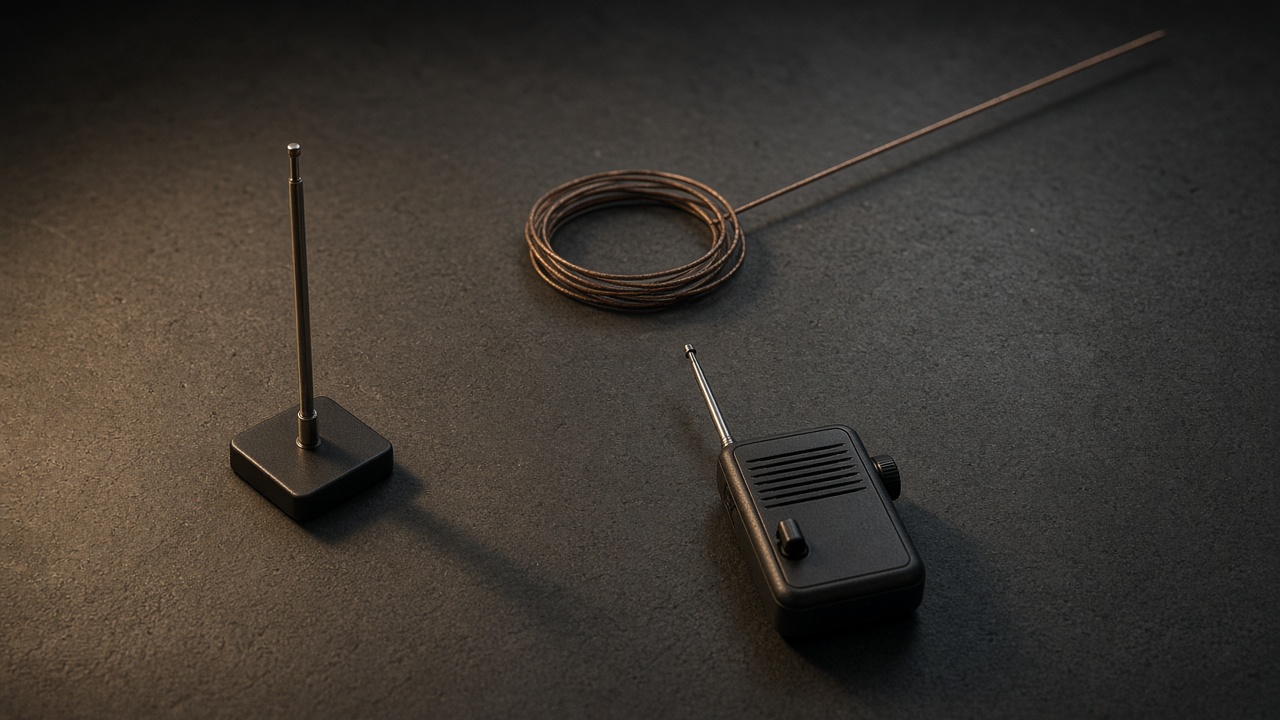
HF, VHF, and UHF are the three ranges hams talk about most. They are not three flavors of the same radio. The signal travels differently, so the antenna, the license, and the kind of contact are different too.
HF is the high-frequency range, from 3 to 30 MHz. A signal there can refract from the ionosphere and land far past the horizon. Hams also treat 160 meters as part of HF operating, even though that band sits just below 3 MHz.
VHF runs from 30 to 300 MHz. UHF runs from 300 MHz to 3 GHz. On the bands in daily use, those signals go by line of sight. They are the local bands.
What HF Is For
The HF bands people use all the time include 80, 40, 20, 15, and 10 meters. Eighty is a nighttime and regional band. Forty works across a lot of hours and a lot of distances. Twenty is the daytime long-haul band operators leave a radio on. Fifteen and ten open when the Sun is active, and they can go quiet for long stretches when it is not.
The antenna has to fit the wavelength. A 40-meter dipole is a long wire for a small yard. That is the trade. In return you can talk well beyond your town without a repeater in the middle.
Most HF phone bands open up with a General license. A Technician has some HF privileges, and they are easy to outgrow if distant voice contacts are what you want. The upgrade is Technician to General.
What VHF and UHF Are For
The busy VHF band is 2 meters, 144 to 148 MHz in the United States. The busy UHF band is 70 centimeters, 420 to 450 MHz. Six meters is VHF too, and it sometimes acts like both worlds, which is why operators call it the magic band. The 1.25-meter band, 222 to 225 MHz, is active in some US cities and missing from the amateur allocations of many other countries.
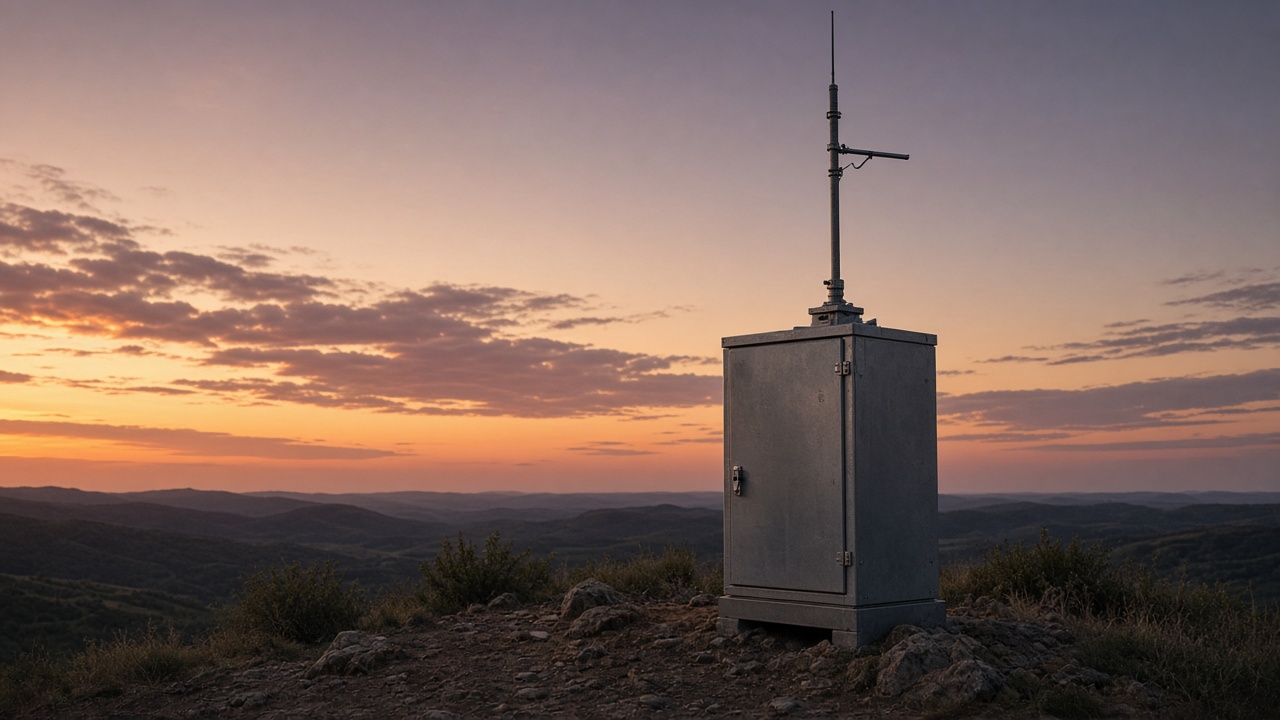
These signals like height and a clear path. A hill or a building stops them. A repeater on a tall site gives a handheld the range it does not have on its own. How to use one is the subject of ham radio repeaters.
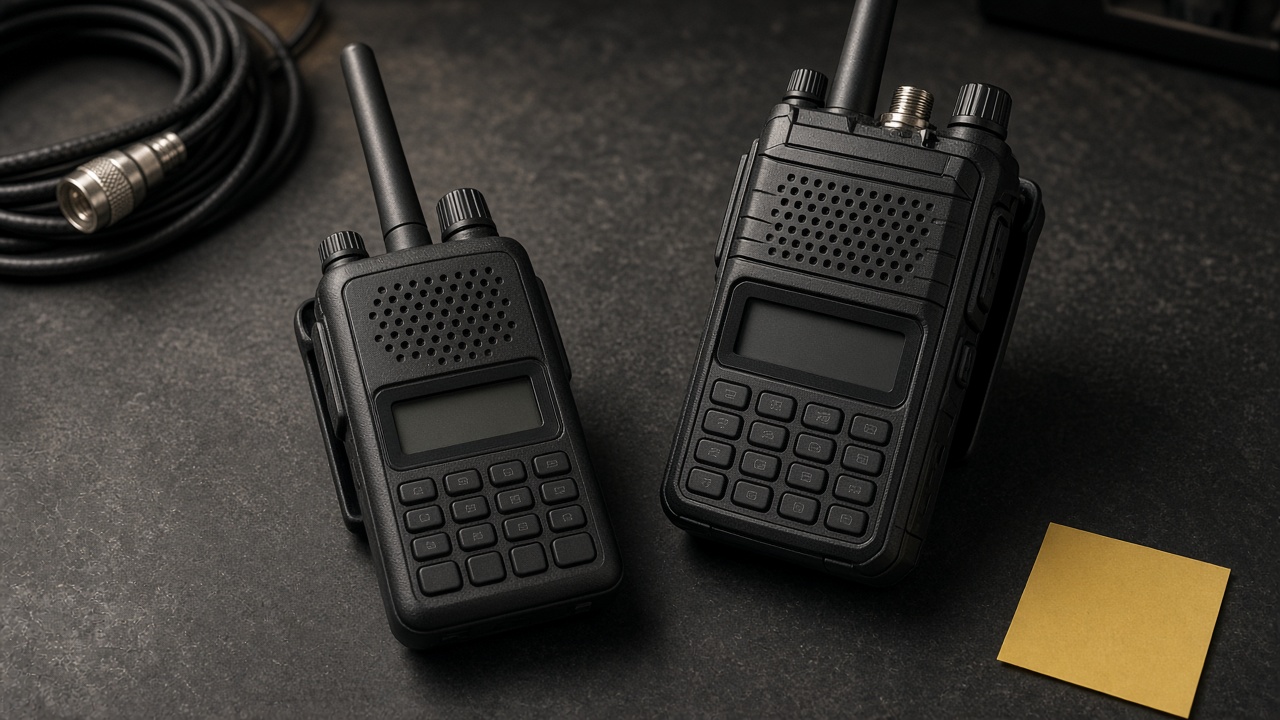
FM on these bands is the easy local mode. Digital voice, packet, and satellites live here too. A radio built for the 2-meter and 70-centimeter part of this is a dual-band or tri-band radio.
What Changes When You Pick a Range
HF rewards a wire in the air and some patience with conditions. The same station can be loud at noon and gone after dinner. That swing is normal. Ham radio propagation is the explanation.
VHF and UHF reward a clear shot and a current repeater listing. The contact is usually local, FM audio is clean, and the antenna can live on a car or a roof. Range without a repeater is about the radio horizon. Unusual openings happen. They are a bonus, not the plan.
The noise is different too. HF hears power lines, appliances, and static. VHF and UHF are often quieter, until a bad device sits next to the antenna.
Which One to Use
If you want other states or other countries, and you have room for a wire, use HF.
If you want the local net, the club repeater, or a radio in the car, use VHF and UHF.
Most hams end up with both. The handheld gets you on a local machine this week. The HF station is the longer project, mostly because of the antenna.
Emergency groups lean on VHF and UHF because the radios are simple and the repeaters are local, and they keep HF for the long path. That mix is part of amateur radio emergency communication.
Frequently Asked Questions
What is the difference between HF, VHF, and UHF?
HF is high frequency, 3 to 30 MHz. Those signals can bounce back from the ionosphere and cover great distances. VHF is 30 to 300 MHz, and UHF is 300 MHz to 3 GHz. On the amateur bands people use every day, VHF and UHF travel by line of sight, so range depends on height, terrain, and repeaters.
Which HF band should I try first?
Forty meters is busy a lot of hours and covers a useful mix of distances, and twenty meters is the daytime band for distant stations. Eighty meters often comes alive at night. Fifteen and ten meters open when the Sun is active and can sit quiet when it is not, so listen before you pick a favorite.
Why do handheld radios use 2 meters and 70 centimeters?
The antennas are small, FM is easy to use, and those two bands hold most local repeaters. Two meters is 144 to 148 MHz in the United States, and 70 centimeters is 420 to 450 MHz. A handheld reaches nearby machines, while an antenna up high reaches farther.
Do I need a General license for all of this?
Technician privileges cover the usual FM work on 2 meters, 70 centimeters, and the other VHF and UHF bands, while Technician HF privileges are real and limited. Most HF phone operating waits for a General license. The radio you own does not change that.