Amateur radio emergency communication is a job with a script. Phones fail, the internet fails, and a trained operator moves a written message from one place to another on a radio that does not need either of those networks.
The work is calm on purpose. Net control runs the frequency. You check in when asked, you pass the traffic you were given, and you write down what you heard. Heroics are a different hobby.
You get good at it before the storm. The Tuesday night net is the practice.
Who You Are Working For
A served agency asks for communications help. That might be emergency management, a Red Cross shelter, or a weather net. You are the circuit. They are the people who decide what the message means.
ARES, the Amateur Radio Emergency Service, is the ARRL program that organizes those volunteers and trains them against the local plan. It keeps working relationships with groups such as the American Red Cross, the National Weather Service, and the Salvation Army. Your county’s version of that list is the one that matters.
RACES is the Radio Amateur Civil Emergency Service. It is a separate program tied to civil preparedness, and you operate under its rules when it is activated. Same people often train for both. The activation is what tells you which hat is on.
The ARRL ARES page describes the national program. The local group sets the schedule. Join that group before you need the frequency.
The Bag
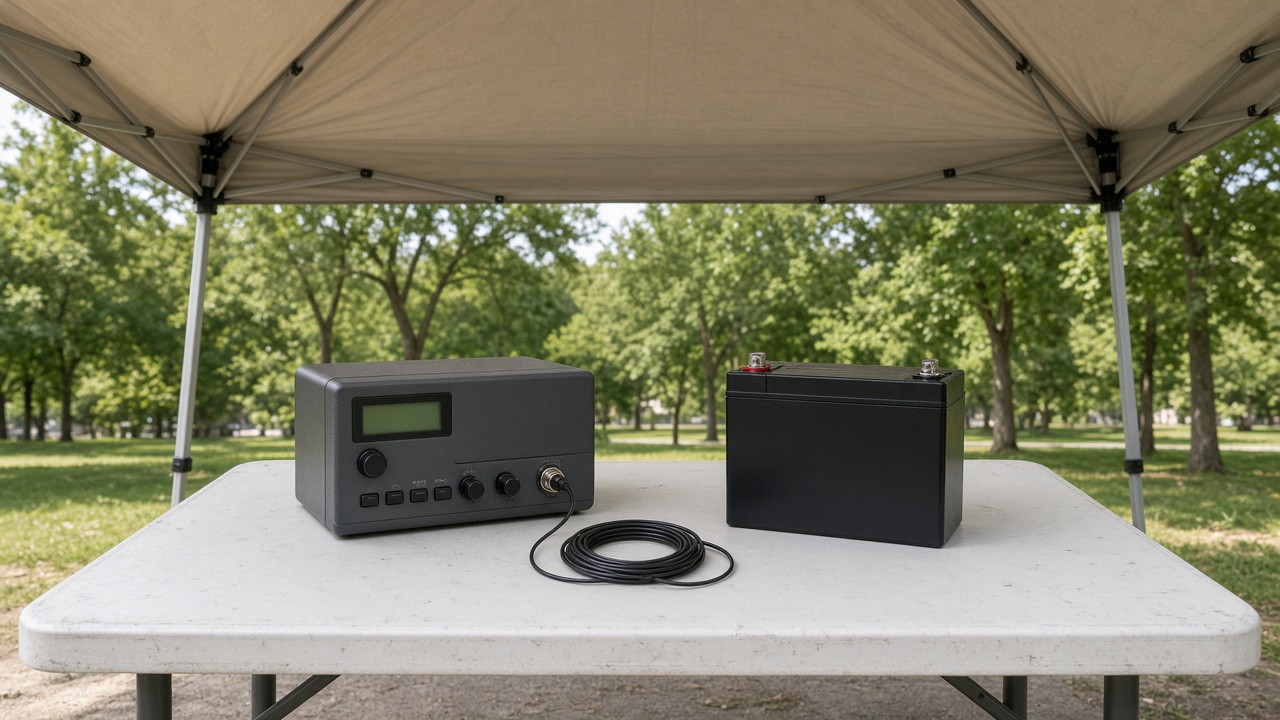
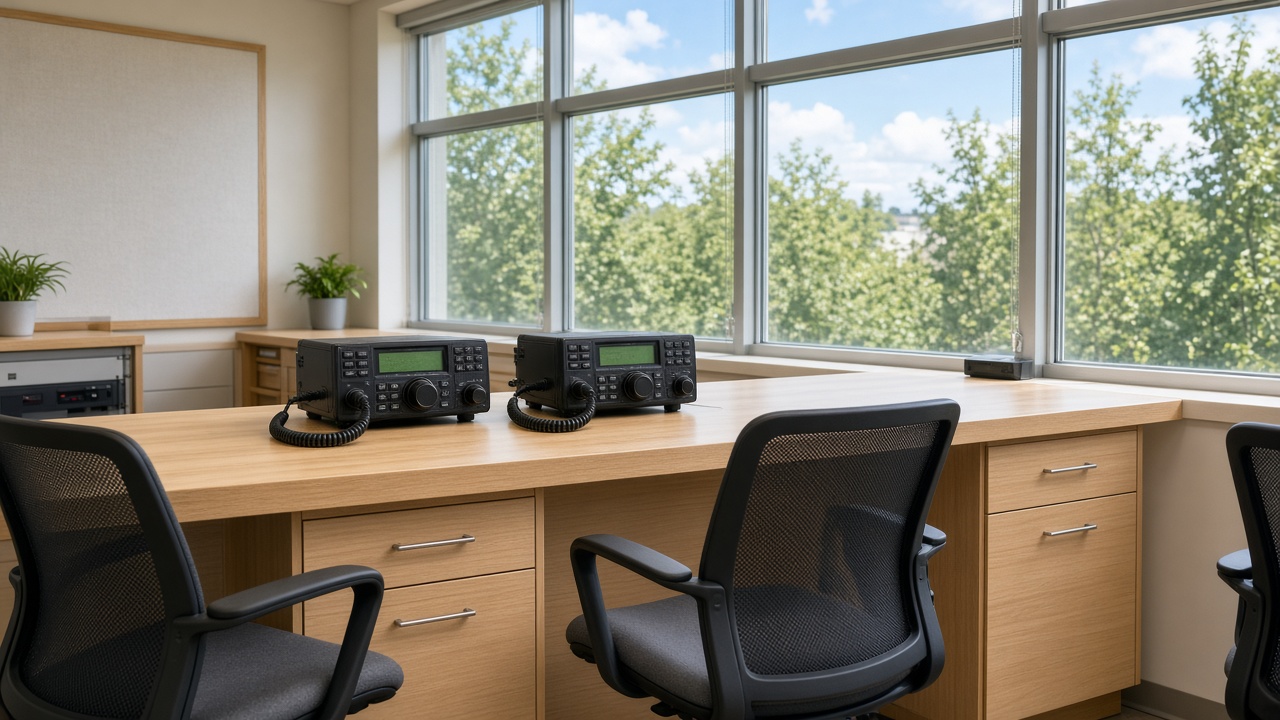
A handheld gets you to a repeater or a simplex net. A mobile radio, on a battery, reaches farther and lives happily on a table. A home station with backup power is the third piece, and it stays home.
Antennas matter more than a second handheld. A roll-up J-pole in a tree, or a mag-mount on a cookie sheet if that is what you have, will outperform the rubber duck that came with the radio. The shapes are the same ideas as best ham radio antennas, packed so you can hang them.
Power is a battery you have cycled, plus a way to charge it that does not assume the wall works. Deep-cycle batteries, a LiFePO4 pack, a small solar panel, or a generator all show up in real kits. Whichever you own, fuse it. The buying choices are in ham radio power supply.
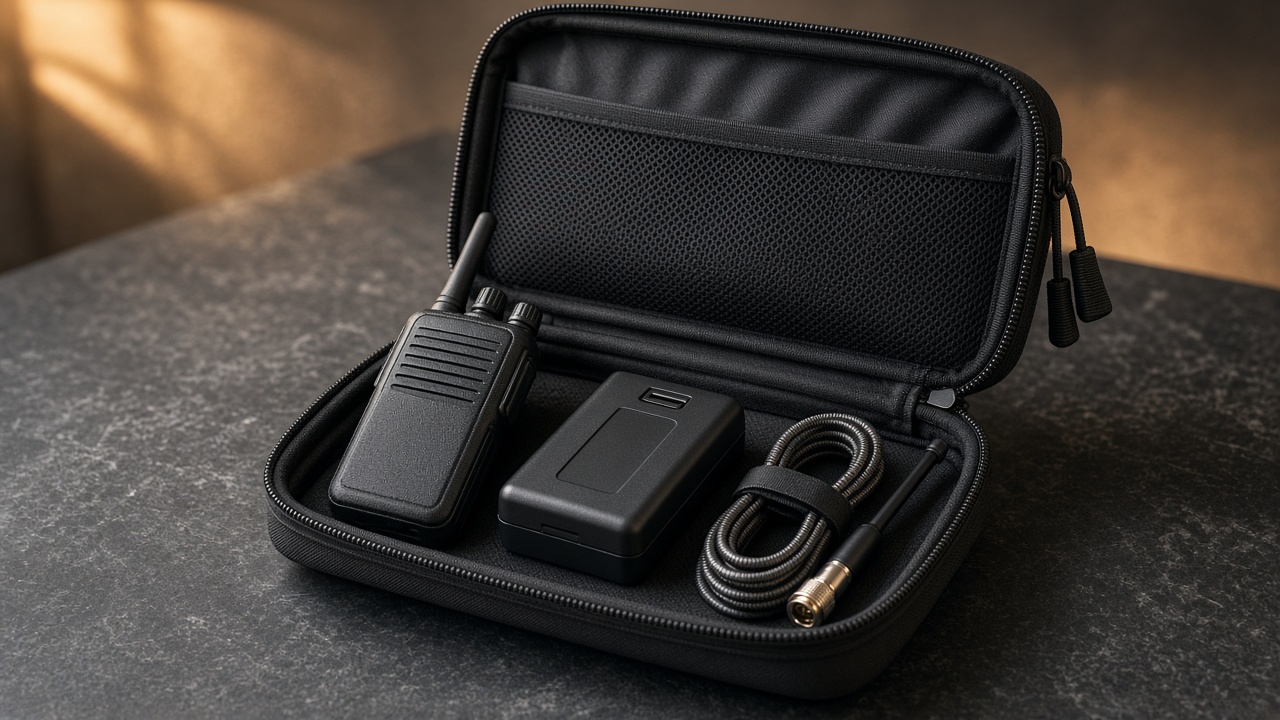
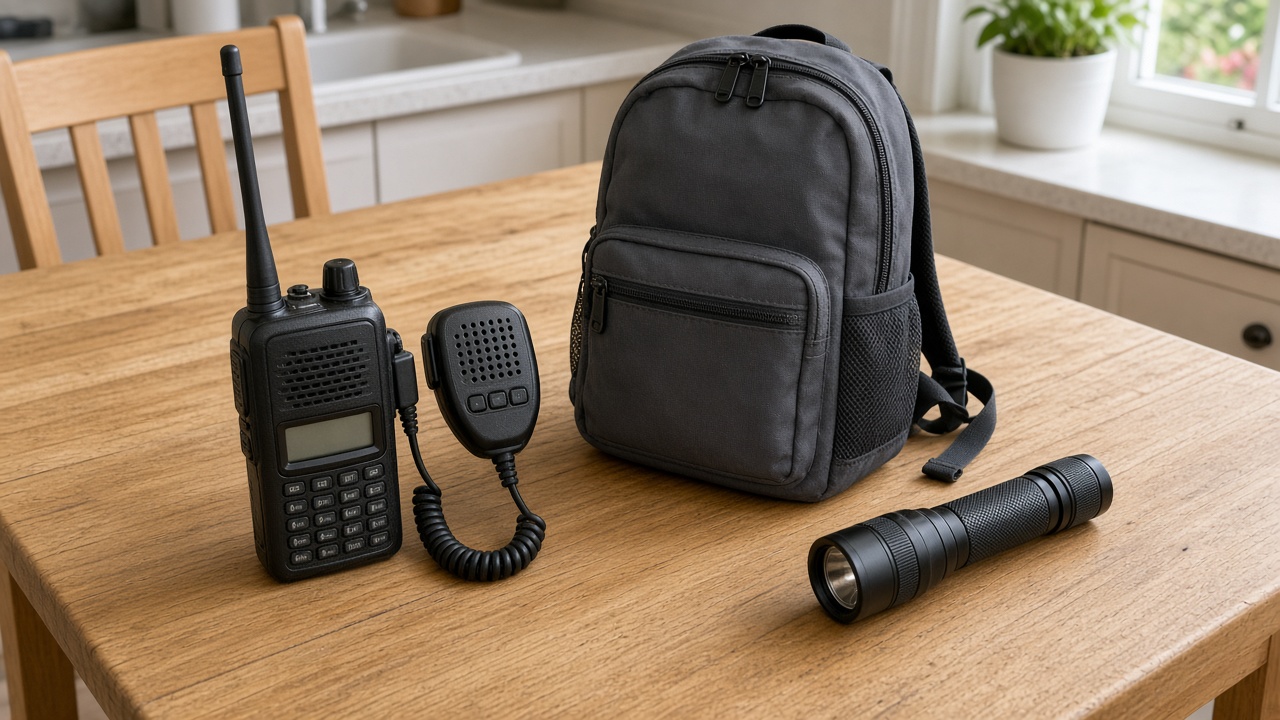
Put the whole pile in one bag and label it. Extra batteries, the charger, coax, adapters, a pen, message forms, and the frequency list on paper. Plastic against rain. That bag is a ham radio go kit. Pack it once, then unpack it in the driveway and make a contact. The missing adapter shows up there, which is the point.
On the Net
Listen before you transmit. Net control will tell you how to check in. Do that, then wait. Side conversations during a directed net are how a message gets stepped on.
Speak in plain language. Skip the Q-codes and the slang unless the net has asked for them. Say the message the way it was written. If you did not copy it, ask for a fill. Inventing the missing word is worse than a repeat.
A tactical name such as Shelter or Logistics tells the net which job is talking. Your call sign still has to be there, at the end of the contact and at least every 10 minutes, the same as any other day. The everyday version of that habit is ham radio etiquette.
Write every message. Who sent it, who it is for, the time, and the words. Many groups use a standard form so the shelter and the radio operator cannot drift apart. Priority traffic goes before a routine note. If net control says to stand by, you stand by.
Repeaters carry a lot of this, until they do not. Know the simplex frequency your group will move to. The machines themselves are ham radio repeaters. Have the tone and the offset written down. A dead phone is a bad time to look them up.
Practice on a Normal Weekend
Skills rust. A weekly net takes twenty minutes and tells you the radio still works. A drill with the served agency tells you whether their clipboard and your form are the same form.
Field Day is the big public version of the setup practice. You leave the usual shack, you put up antennas, you run on the power you brought, and you make contacts. It is an operating event with a festive mood. Treat the setup as rehearsal and the contacts as the fun part. An emergency net is quieter and stricter than that weekend.
Take the courses your group recommends. The ARRL emergency-communications training is the common one. Then do the drill anyway. A certificate in a dry bag does not aim the antenna.
Show Up Before the Call
Go to the meeting. Volunteer for the parade or the foot race, where the traffic is real and nobody is scared. Those events are how net control learns your voice.
Tell the coordinator what you can actually do. A handheld and a go kit is a useful station. Promising a tower trailer you do not own is not. When they call, you already know the channel, the check-in format, and who is allowed to hand you a message.
The ham radio club is usually the front door. If the club has an emergency coordinator, that person is the one to ask. Bring the radio you plan to use. Leave it in the car and you learned nothing about the connector.
Frequently Asked Questions
Do I have to join ARES before I can help?
For a real activation, the people who want your help want you trained and known. ARES is the common way in. Showing up with a radio and no net discipline adds traffic. Take the local course, check into the weekly net, and let them assign you.
What is a tactical call sign?
It is a job name, such as Shelter or Net Control, so people can find the function when operators change shifts. It does not replace your call sign. You still identify with your FCC call sign the way the rules require.
What belongs in the kit?
A radio you have already used, spare power, an antenna that packs, headphones, a pen, and a written list of the repeaters and simplex frequencies your group uses. Connectors and a fuse. If you have never deployed the bag in the driveway, it is not finished.
How is Field Day related?
Field Day is the yearly practice for setting up away from your normal station and operating for the day. It is an operating event, and it is good rehearsal. An actual emergency is a directed net passing someone else's messages.