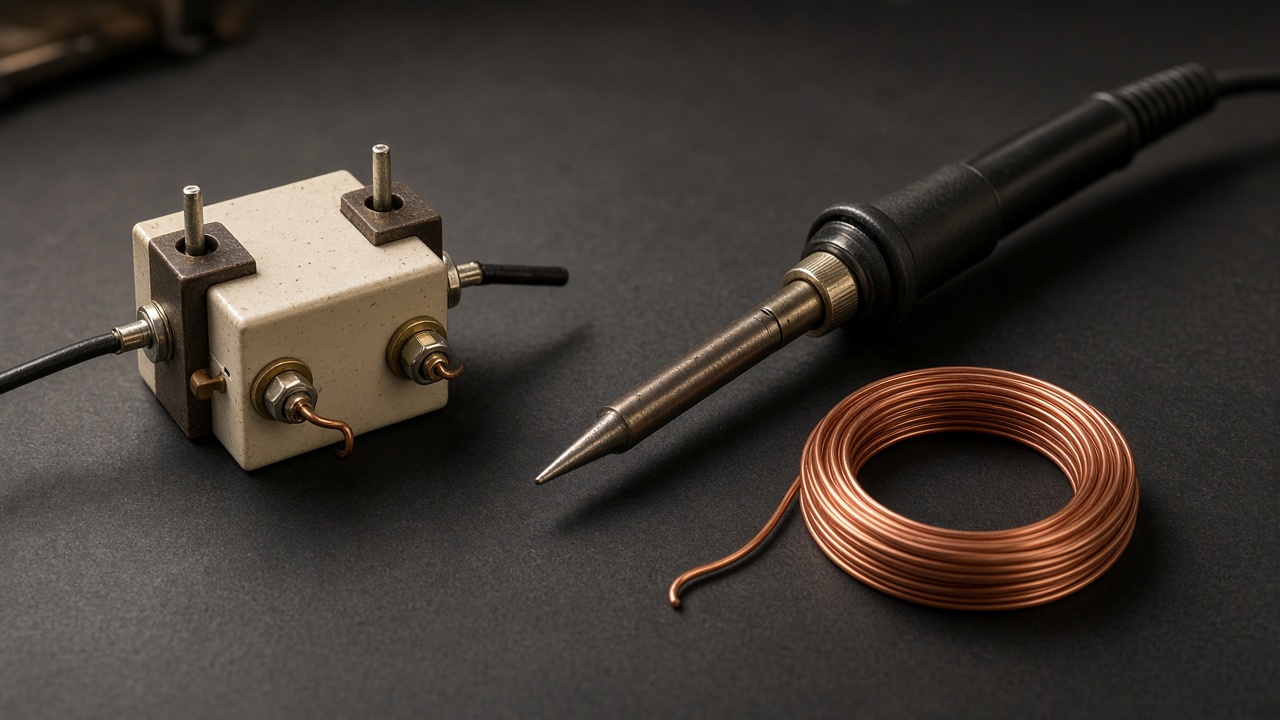
DIY ham radio is the part where the hobby clicks. You stop buying boxes and you build one thing that has to work.
Five projects cover the skills that show up over and over. Wire, solder, power, and a clean connection to a computer. None of them need a lab. They need a afternoon and the patience to measure twice.
Build them in any order. The dipole is the one you will use even if you never touch a kit.
A Dipole You Can Actually Hang
A half-wave dipole is two wires, a center insulator, two end insulators, and coax. Each side is a quarter wave. For a first cut in feet, divide 234 by the frequency in megahertz. That length is one leg. Cut both legs a bit long.
Solder or clamp the wires so the feed point cannot pull apart in the wind. Get the wire up, away from power lines, and as flat as the yard allows. Then check SWR and trim a little from both ends until the dip sits where you operate.
A balun at the center keeps the coax from becoming part of the antenna. What that box is doing, and when you want an unun instead, is the whole of unun vs balun. The feed line itself should be installed like any other coaxial cable: dry connectors, no crushed jacket, strain relief at the ends.
The same shape shows up in best ham radio antennas because it works. Building one teaches you more than reading the pattern chart.
A QRP Kit
Low-power kits for 40 meters and 20 meters are a fair first radio build. You get a bag of parts and a board. Sort the resistors before you solder anything. Build one stage, test it, then build the next.
Most of these radios are a simple receiver and a small transmitter. You will meet an oscillator, a mixer, and an audio amplifier whether the kit is direct conversion or a superhet. When a stage is dead, you learn to find the cold joint instead of replacing the whole radio.
The box, the knob, and the key jack are part of the build. A radio that works on the bench and fails when you close the lid has a wire in the wrong place. Fix that before you chase a contact.
The first QSO on a radio you built is the point. Power is low, so the antenna from the last project matters.
A Code Practice Oscillator
Morse code practice should not require a transmitter. A 555 timer, a handful of resistors and capacitors, a speaker or a buzzer, and a straight key will do it. Breadboard it first. Solder it after the tone sounds right.
Power it from 9 volts or 12 volts. Change the timing parts if the note is a screech or a thud. You want a tone you can stand for twenty minutes.
This thing never goes on the air. It sits on the desk. When the characters start to sound like letters, then you take them to a radio. Until then you are learning the code, not lighting up a band.
A Pack You Can Carry
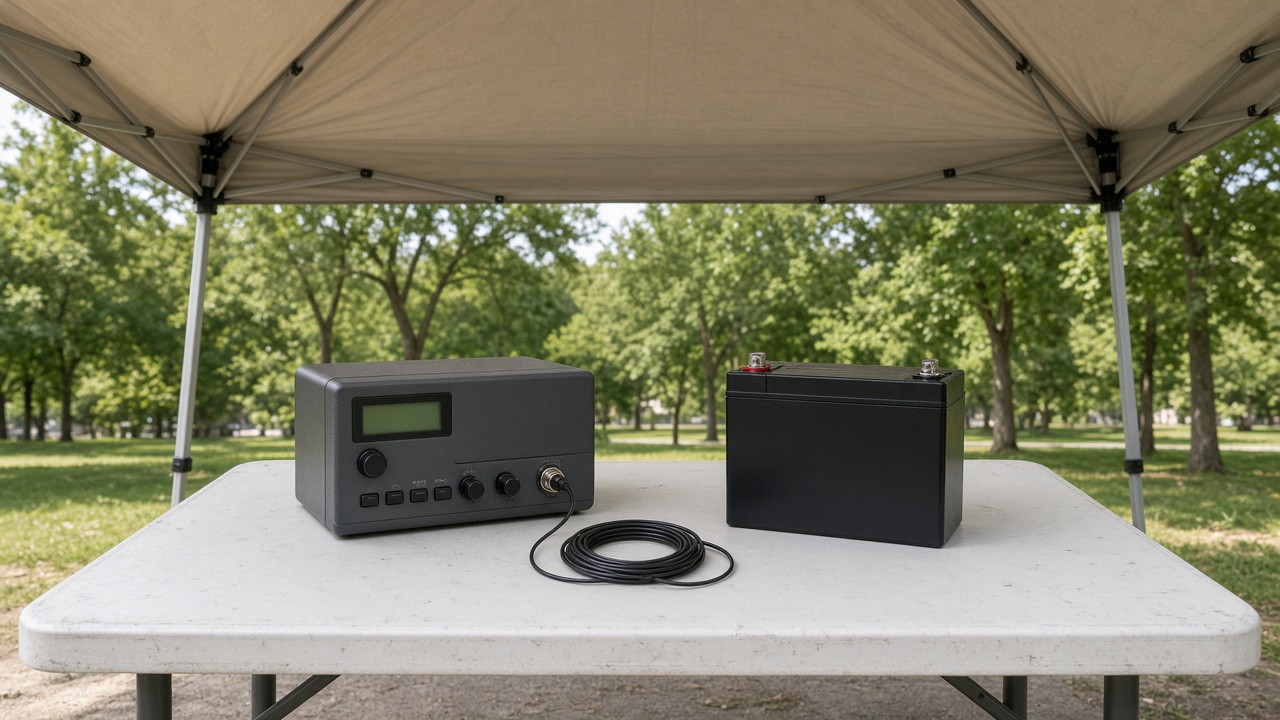
Portable power is a 12-volt battery the radio can actually draw from, a fuse at the battery, and the connector your radio expects. Sealed lead-acid and LiFePO4 are the common choices. A recycled laptop pack only belongs in the box if you know the cell limits and you fuse it.
Match the voltage before you get clever. A lot of QRP gear wants about 12 volts. A “12-volt” radio that sees a freshly charged pack can be unhappy if you skipped the regulator the kit expected. Read the radio’s range.
Add a way to charge it, and a way to see that it is charged. A handle and a case matter more than a label. If you might run it outdoors for hours, a small solar panel is a charger, not a personality.
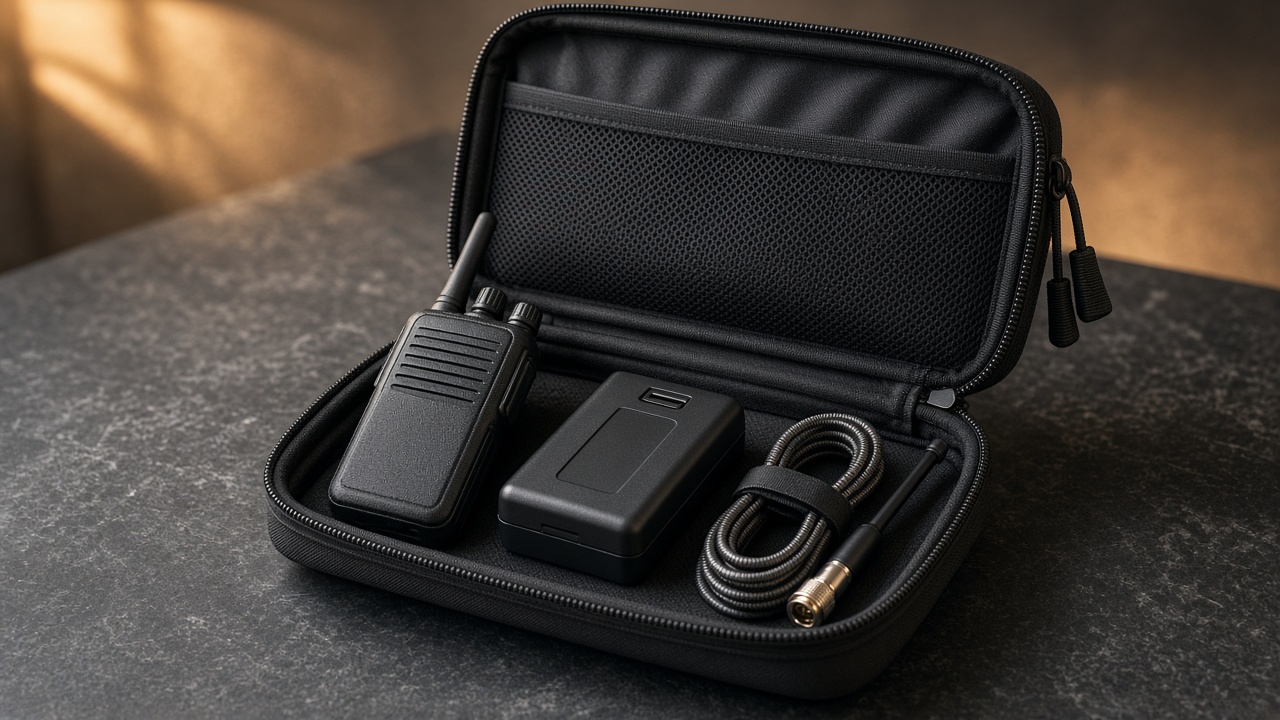
This is the same problem as a ham radio power supply, just without the wall outlet. Pack it the way you would pack a portable ham radio setup. Field Day is one good excuse to find out whether the fuse is the right one. The weekend itself is covered under Field Day.
A Box Between the Radio and the Computer
Digital modes need audio in, audio out, and a way to key the radio. A home-built interface does that without tying the computer ground to the radio ground.
Use audio transformers on the receive and transmit lines. Use an opto-isolator or a small transistor for PTT from a serial or USB adapter. Jacks that fit your radio go on the box. A metal box helps when the shack is noisy.
Then set the levels. Receive audio should decode. Transmit audio should be clean, with no ALC pinned to the edge. If the computer’s hum is in the signal, you built a ground loop and the transformers are there to stop that. Station noise of the other kind is RFI. Fix the cable before you blame the band.
Once the box works, FT8 and PSK31 are the modes to try. The interface does not care which one you type into. The level setting does.
Frequently Asked Questions
How long do I cut a dipole?
Each leg is a quarter wave. A common start, in feet, is 234 divided by the frequency in megahertz. Cut it a little long, hang it, and trim both sides equally while you watch the SWR. The number is a start, not a finish.
Is a QRP kit worth building if I already own a radio?
Yes, if you want to see how an oscillator, a mixer, and an audio stage fit together. The contacts are the bonus. Low power makes the antenna and the operator do the work, which is the lesson.
What should a home-built digital interface include?
Audio transformers keep the radio and the computer off each other's ground. An opto-isolator or a transistor keys PTT. Put it in a metal box if you have RF in the shack. Then set the levels so the transmit audio is clean.
Can I practice Morse code with no antenna?
A code oscillator never transmits. A 555 timer, a speaker, a key, and a 9-volt or 12-volt supply will make the tone. That is enough to practice. You only need a radio when you are ready to send on the air.