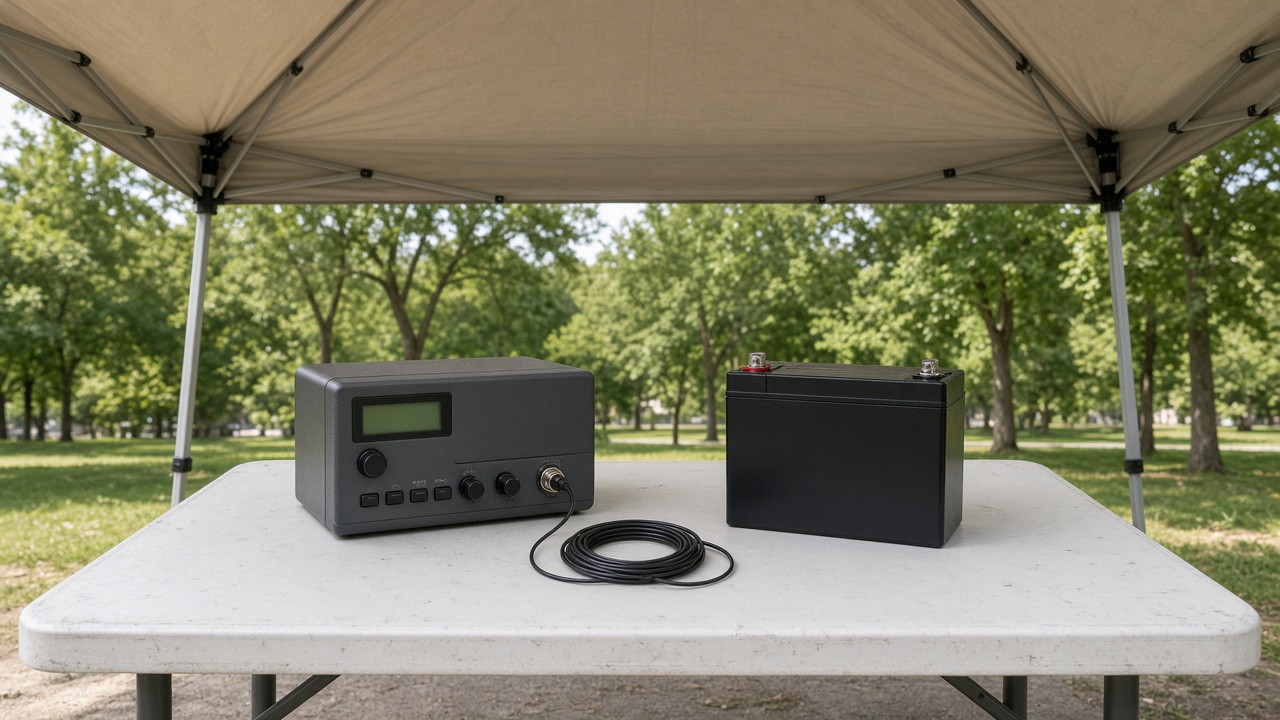
Field Day is the weekend hams set up a station away from the usual desk, get on the air, and see what breaks. It happens every June in the United States and Canada. Clubs treat it as a party that happens to be good practice.
You make contacts. You also find out whether the antenna, the battery, and the operator still work when the shack is a folding table. That second part is why the event has lasted.
Read the rules for the year you go. Classes, bonus points, and the exact clock change often enough that a memory from last time is not a plan.
What You Are Walking Into
The ARRL Field Day page is the source for the hours and the classes. The operating window falls on the fourth full weekend of June. Most entries are on the air for a day inside that window. Get some sleep in the plan before you promise to cover the whole thing.
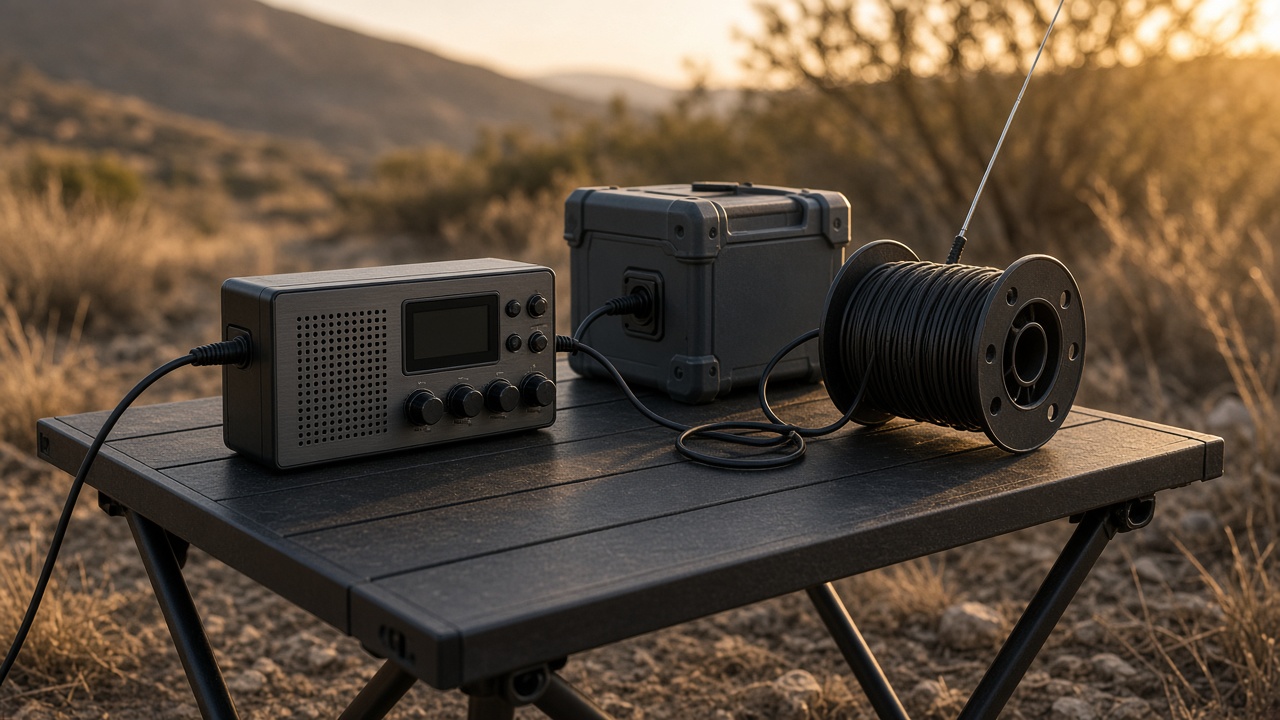
The mood is a contest and a cookout at the same time. The exchange is short. The setup is half the story. A station running on emergency power, in a place that is not the home shack, is the picture the event was built around.
It is also rehearsal for the day the lights go out. The stricter version of that job is amateur radio emergency communication. Field Day is where you learn the knots and the connectors with a crowd around to hand you the right adapter.
The Station on the Table
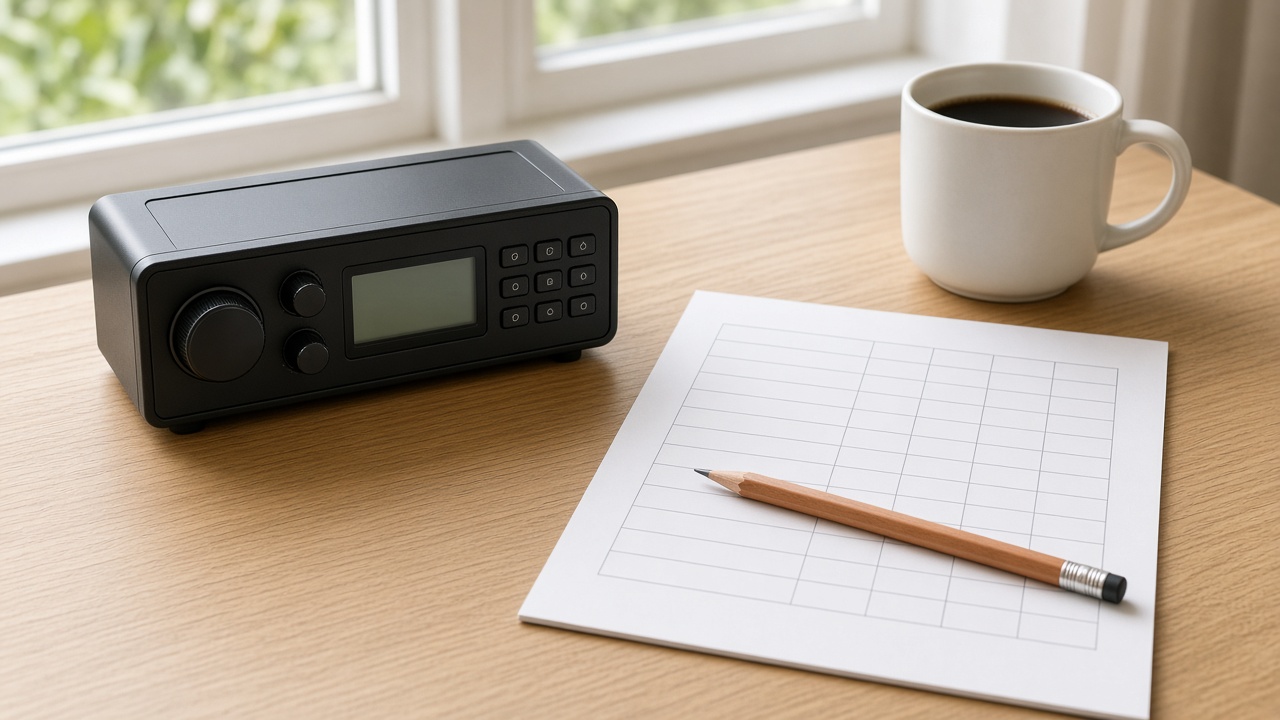
Put the radio, the tuner, and the log where you can reach them without standing up every contact. Coil the spare cable. A loose loop on the ground is a trip, and a trip takes the antenna down with it.
Light for the hours after dark belongs in the box. So do headphones. The generator, if you brought one, should be far enough away that you can copy a weak station.
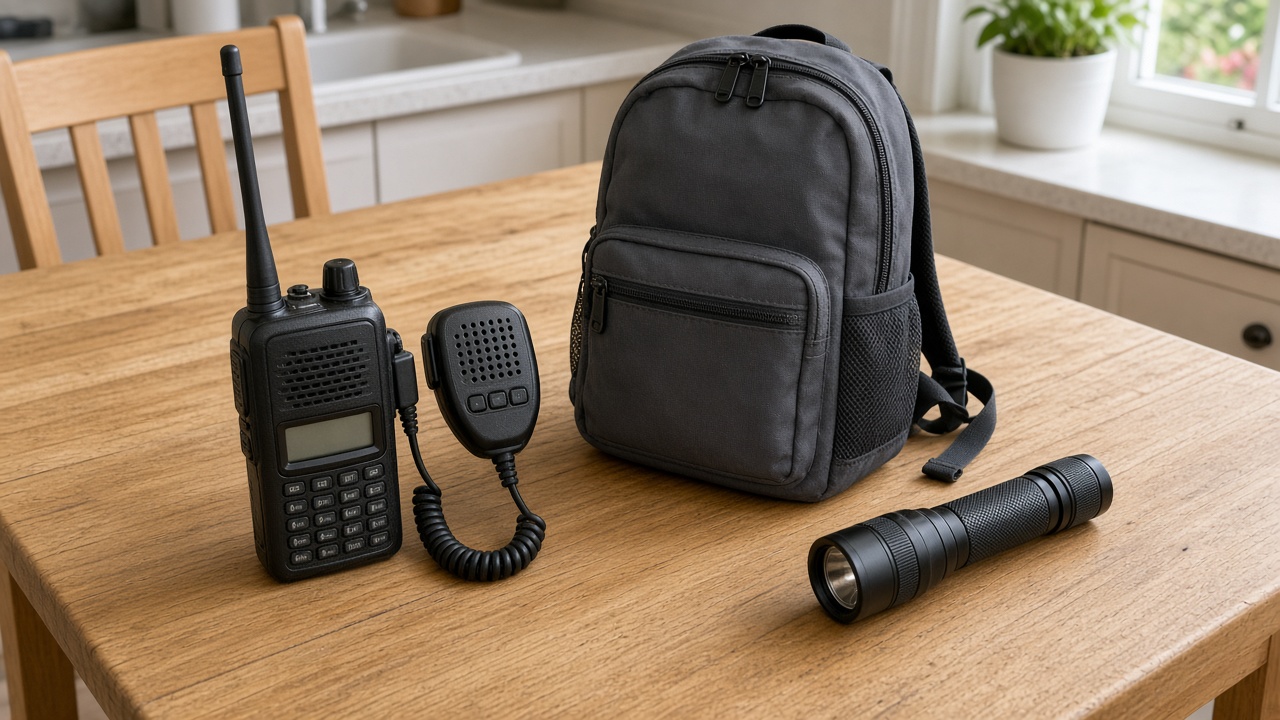
If you are packing from scratch, start with a portable ham radio setup you have already used in the backyard. A ham radio go kit is the smaller version of the same pile. The weekend is a bad time to meet a radio for the first time.
Label the power connector. Future you, at 1 a.m., will thank present you.
Class, Section, and the Log
The exchange is your call sign, your class, and your section. The class looks like a number and a letter. The number is how many transmitters you are allowed to run. The letter is the kind of entry. The section is where you are. Send the same three facts every time.
Listen to two contacts before you jump in. You will hear the rhythm. Then answer with your call sign, and send the exchange once you know they are talking to you.
Log it immediately. Paper works. A logging program with the class and section already filled in works faster and still needs you to watch the call sign. Back the file up before you tear the station down. The ordinary habits are the same as any QSO log. The deadline to submit is in the rules. Put it on a calendar before you pack the car.
Antennas and the Other Modes
Get a wire up. A dipole for the band you care about, as high as you can put it without going near a power line, will make contacts all day. A portable vertical is the other classic. A tuner saves you when the wire is a little off. The families of antennas are in best ham radio antennas.
Feed line still has to survive the weekend. The practical version is coaxial cable installation: connectors tight, jacket uncut, and a drip loop so the rain does not run into the shack tent.
Phone and CW carry a lot of the contacts. Digital modes fill the gaps when the voice segment is a wall of stations or the band is tired. FT8 and PSK31 both show up. Set that interface up at home, not under the canopy. The modes are explained in FT8 and PSK31. The rules say how a digital contact counts. Read that line before you assume it is bonus magic.
Power You Brought With You
Know what the radio draws, and plan the battery or the fuel for the hours you will actually operate. Turn off the gear that is idle. A lamp can be small. A radio left transmitting into a bad match is a heater.
Bring a second source if the first one is a single battery. A generator, a spare pack, or a panel that can charge while you operate. Watch the voltage. A pack that sags under transmit will garble the signal long before it looks empty on the bench.
This is a ham radio power supply problem without a wall outlet. Test the whole chain at home: radio, fuse, connector, battery. Field Day will still surprise you. It should not surprise you with a plug that never fit.
Sit With a Club
A ham radio club already has the site, the antennas, and someone who has done this before. Take a shift. Leave when the shift ends so the next operator gets a working voice.
Ask why the antenna is aimed the way it is. Offer to log if you are not ready to run the mic. Show a newer licensee where the push-to-talk is. Teaching the exchange once is how you find out you know it.
Afterward, read the log for the busted calls and listen to what the club says it will do differently. That conversation is worth as much as the contact total. Then fix one thing in your own kit before next June.
Frequently Asked Questions
When is Field Day?
It is the fourth full weekend of June. Most stations operate for a day inside the window the rules set. The ARRL Field Day page publishes the hours for that year, and those hours are the ones to put on the calendar.
What is the exchange?
You send your call sign, your entry class, and your section. The class is a number of transmitters plus a letter for the kind of station, and the section is the ARRL or RAC section you are operating from. The rules sheet lists the letters, so copy both pieces before you log the contact.
Can I operate from home?
Yes. Some entry classes are home stations, and the rules say how those contacts count. The classic picture is a station set up away from the normal shack, on power you brought. Either way, read that year's classes before you pick a letter.
Do I need a generator?
You need power the radio can live on for your shift. A battery you have already tested is enough for a small station. A generator or a solar panel is the backup when the shift is long. Size it from the radio's draw, and bring a second way to feed the rig if you can.